Gallery
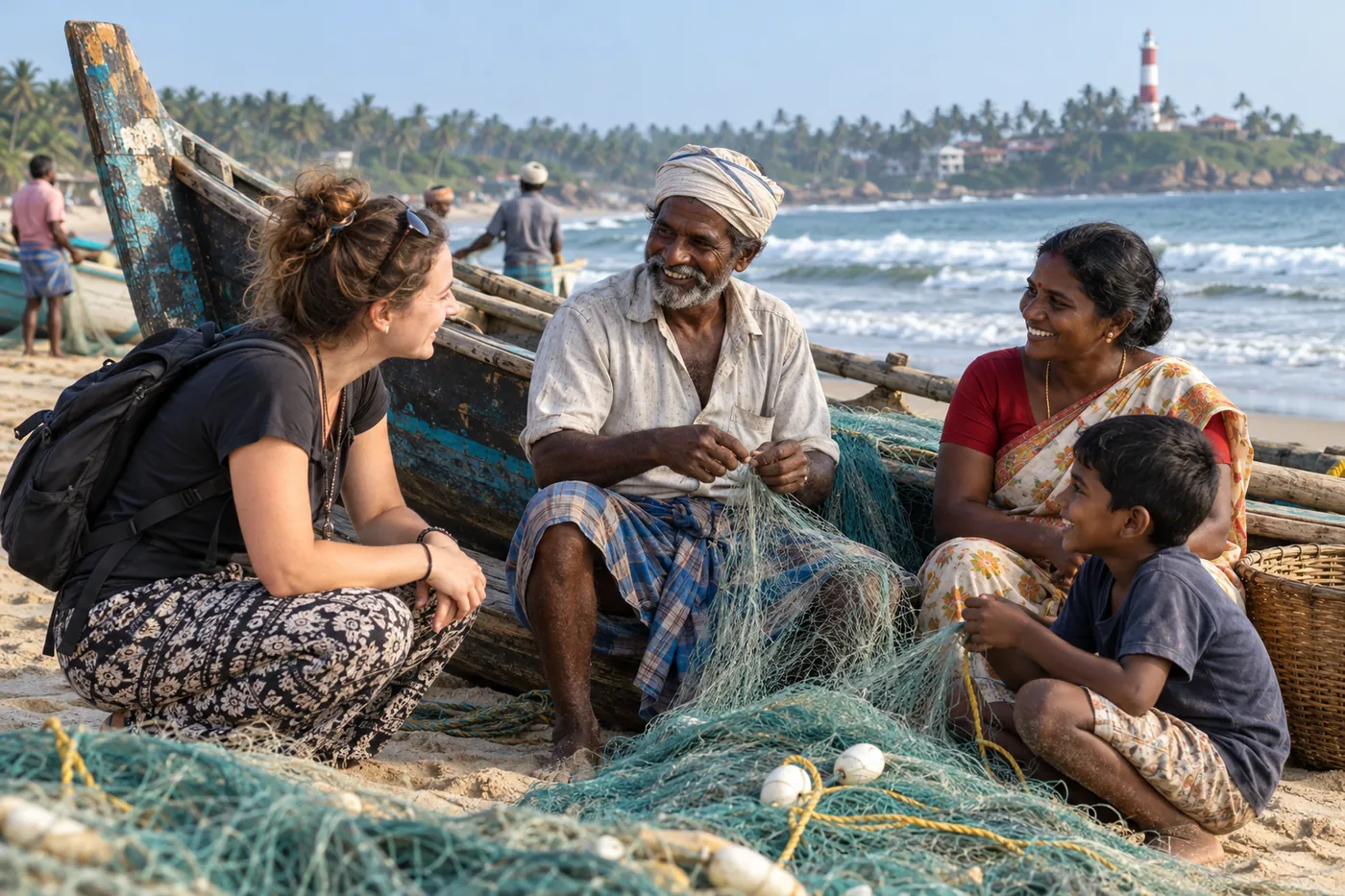
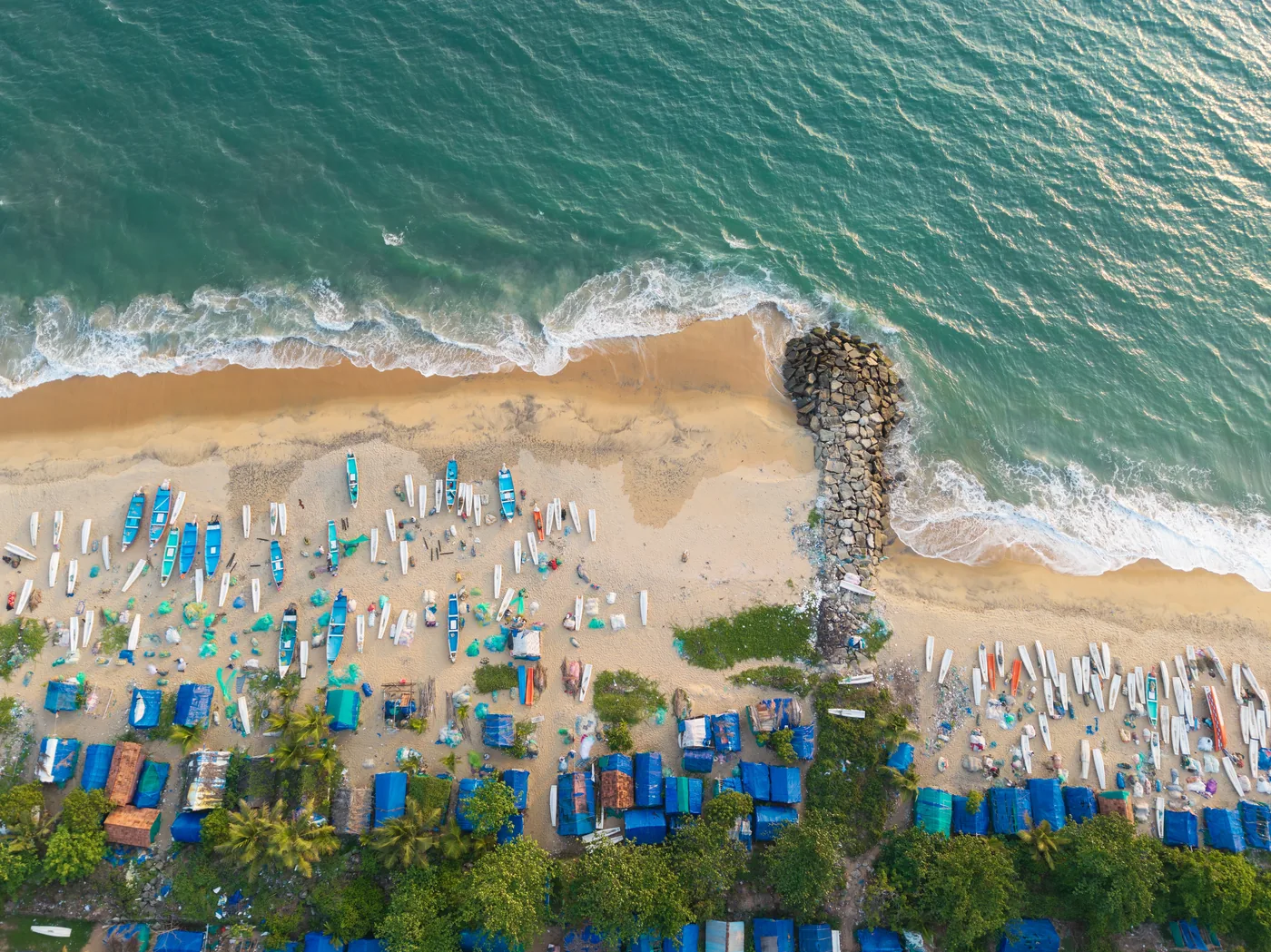
A coastal livelihood, explained by the people who live it.
Kerala's coastal fishing villages run on a rhythm shaped by tide and catch — boats returning at set hours, nets spread out to dry, the smell of salt and fish everywhere. A guided visit introduces the boats, the nets, and the families whose livelihood depends on all of it.
Kerala has around 590 kilometres of coast, and for many families along it, life is set by the sea. In fishing villages, the day begins early with boats going out, and the important moment comes when they return: the beach fills, baskets are hauled up, and the catch is sorted and sold within minutes of landing. Watching that happen is a lesson in how a fishing community works.
On this visit, you go to one of those villages in the morning, at the time when things are happening. You'll see boats being pulled onto the sand or moored, nets being mended, fish being sorted and auctioned, and families going about their day. In Vypin, for example, small boats bring in the morning haul; in Kumbalangi, which began in 2003 as India's first integrated tourism village project, Chinese nets dot the backwaters and fishermen demonstrate their methods. Your guide, from the local area, explains how it all fits together.
Please treat it as what it is: someone's workplace and home. Ask before you photograph people, don't step over nets or equipment, and take your guide's advice on where to stand. The visit can be smelly, wet and busy, and that's the reality of the trade. Wear closed shoes and light clothes, and arrive with curiosity. If you'd like to try a local fish dish afterwards, your guide can suggest a place.
Early morning, around catch landing time, is the most active window.
This experience can be added to a fully personalised itinerary — shaped around your dates, your pace and your interests, never a fixed package. Our signature multi-day journeys go further still: accommodation, meals, transfers and a private guide included throughout, so the only thing left to plan is what you want to feel.
What was the scene like when you arrived?
Boats coming in right as we got there, and the beach filling within minutes, baskets hauled up and the whole catch sorted and sold almost before I'd worked out what was happening.
Did it feel intrusive being there?
Our guide made sure it didn't, he was from the area himself and clearly knew people by name. We were told exactly when to stand back and when it was fine to watch closely, which made the whole thing feel respectful rather than voyeuristic.
Was there a detail about the village itself that surprised you?
Learning that Kumbalangi, one of the villages our guide mentioned, was actually India's first integrated tourism village project, set up back in 2003. I'd assumed this kind of visit was a recent thing, not something that's been thought through for two decades.
What's the thing you'll remember most?
The speed of it, honestly, fish that had been in the sea an hour earlier already being weighed, argued over and sold, a whole economy happening in real time on a stretch of sand.
Every Raw India Experience begins with a conversation. Tell us what you're looking for — we'll design the rest. No payment is taken here.
A confirmation is on its way to your inbox, and a member of our team will personally reply within 24 hours.
Your data will be secured with us. We will not use it for any promotional activities, and we will delete the data after 100 days of non-communication.