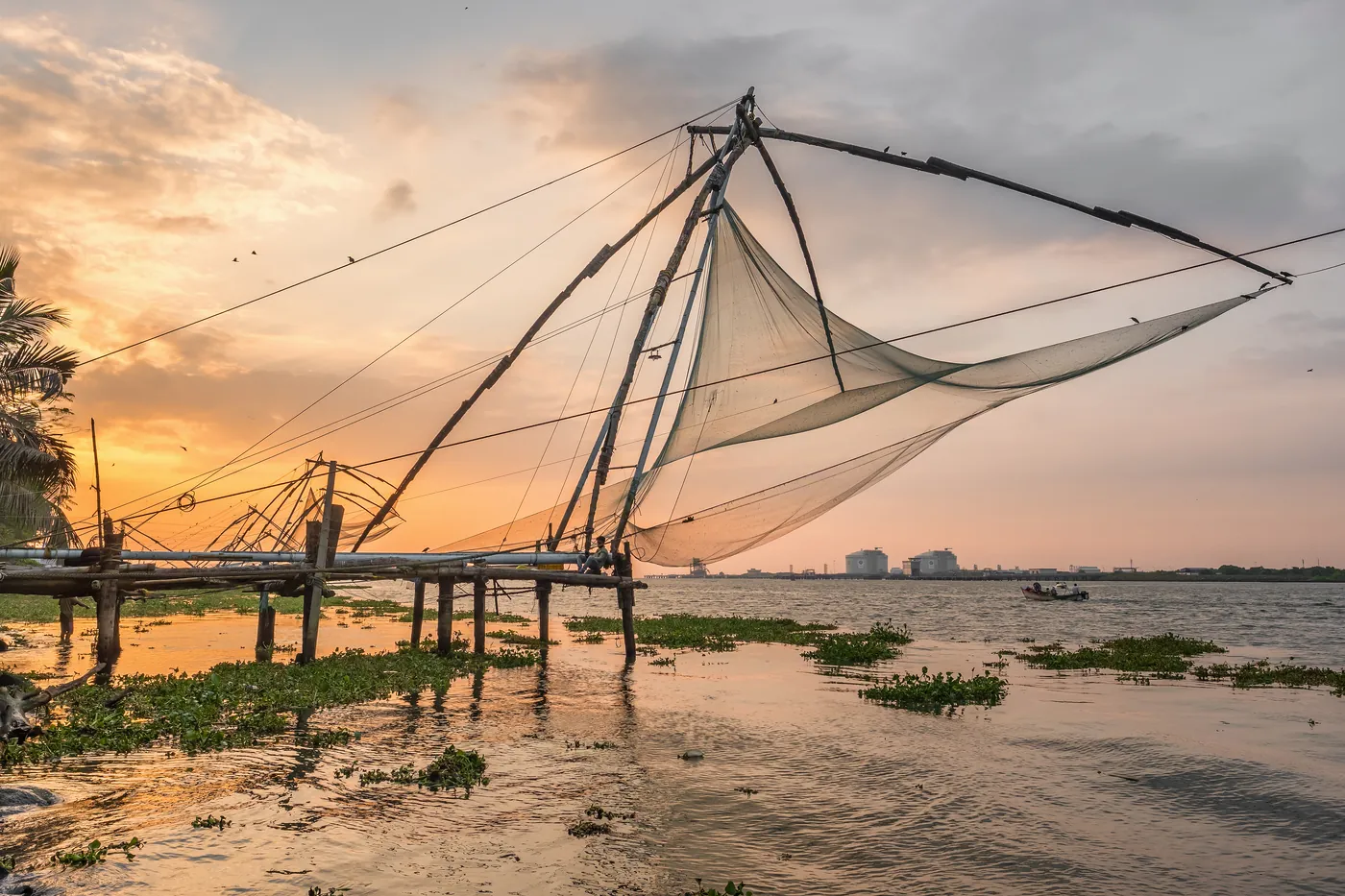
Every street here has a story that changed the world.
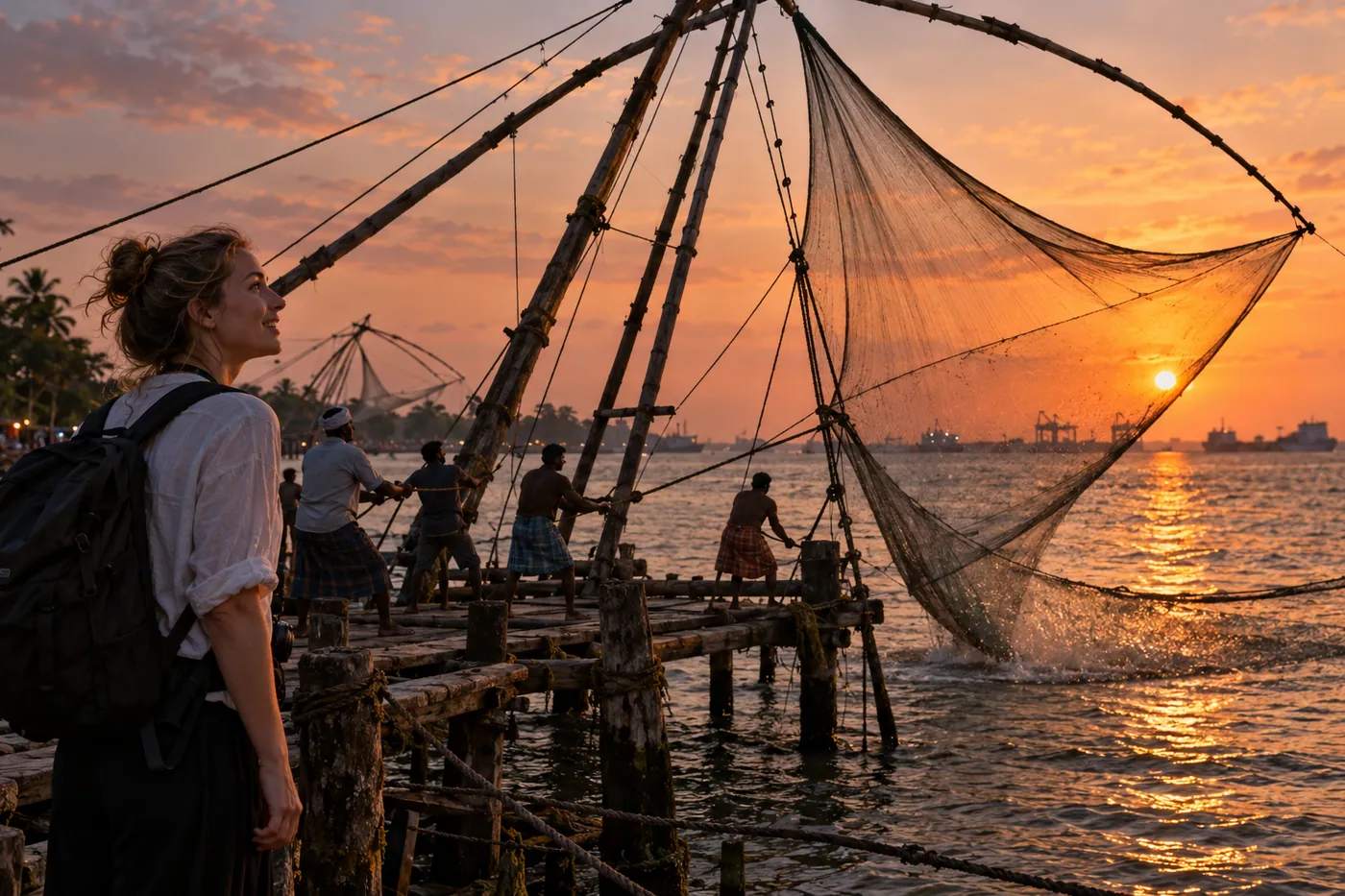
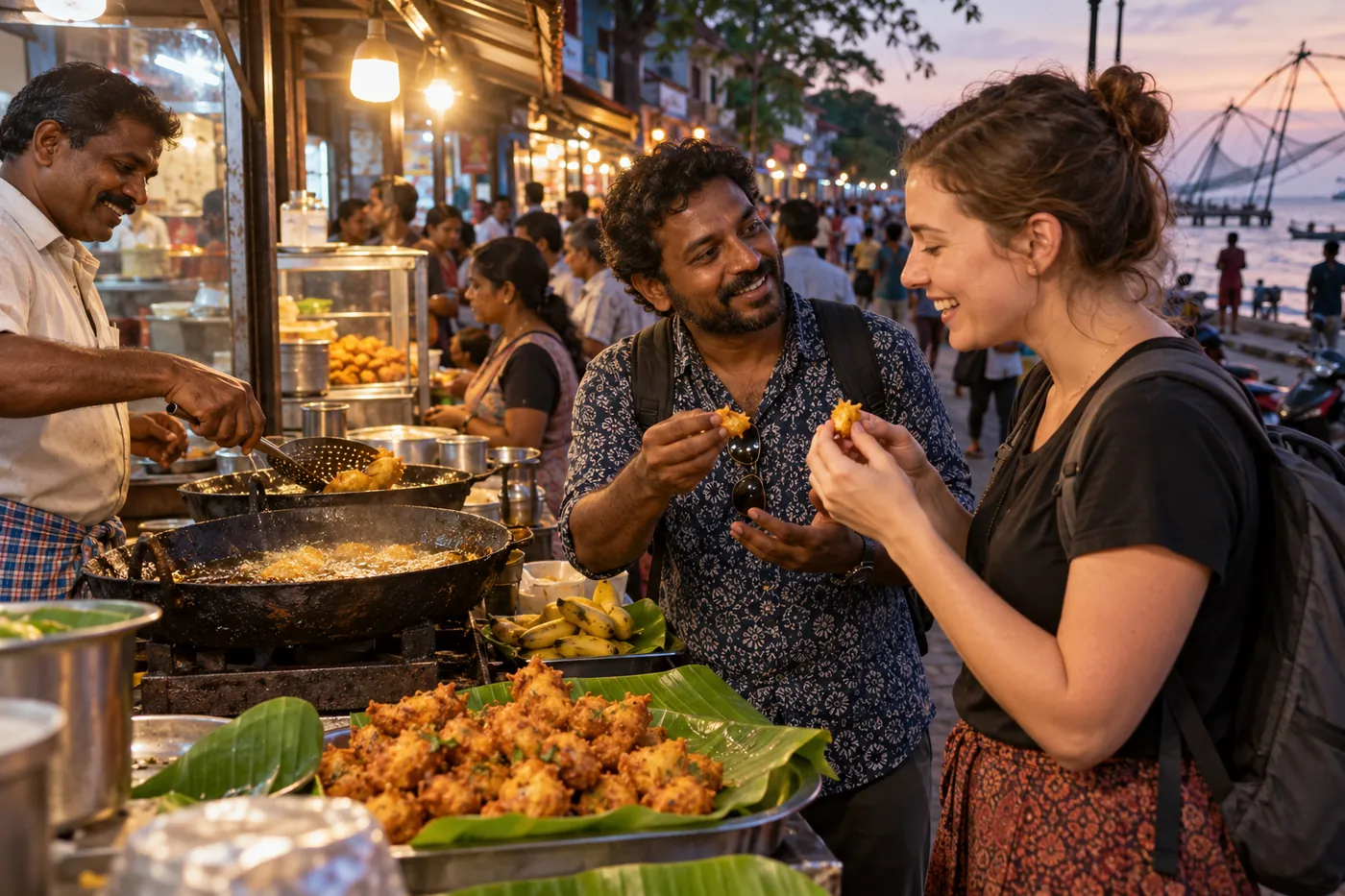
Walk streets where Portuguese traders, Dutch merchants, Jewish settlers, and Chinese fishermen all left their mark — and somehow none of it ever erased what came before. Taste a street snack recipe passed down four centuries. Watch the same fishing nets silhouette the same sunset that's closed every day here since before your country had a name.
Covers all 12 included experiences across the extended 5-day format, every meal, your local guide, private transfers and concierge support.
Per-person totals are at the standard rate for 3–10 guests. Solo travellers pay +30% and couples +15% on activities and stay — the exact figure is shown when you review your plan.
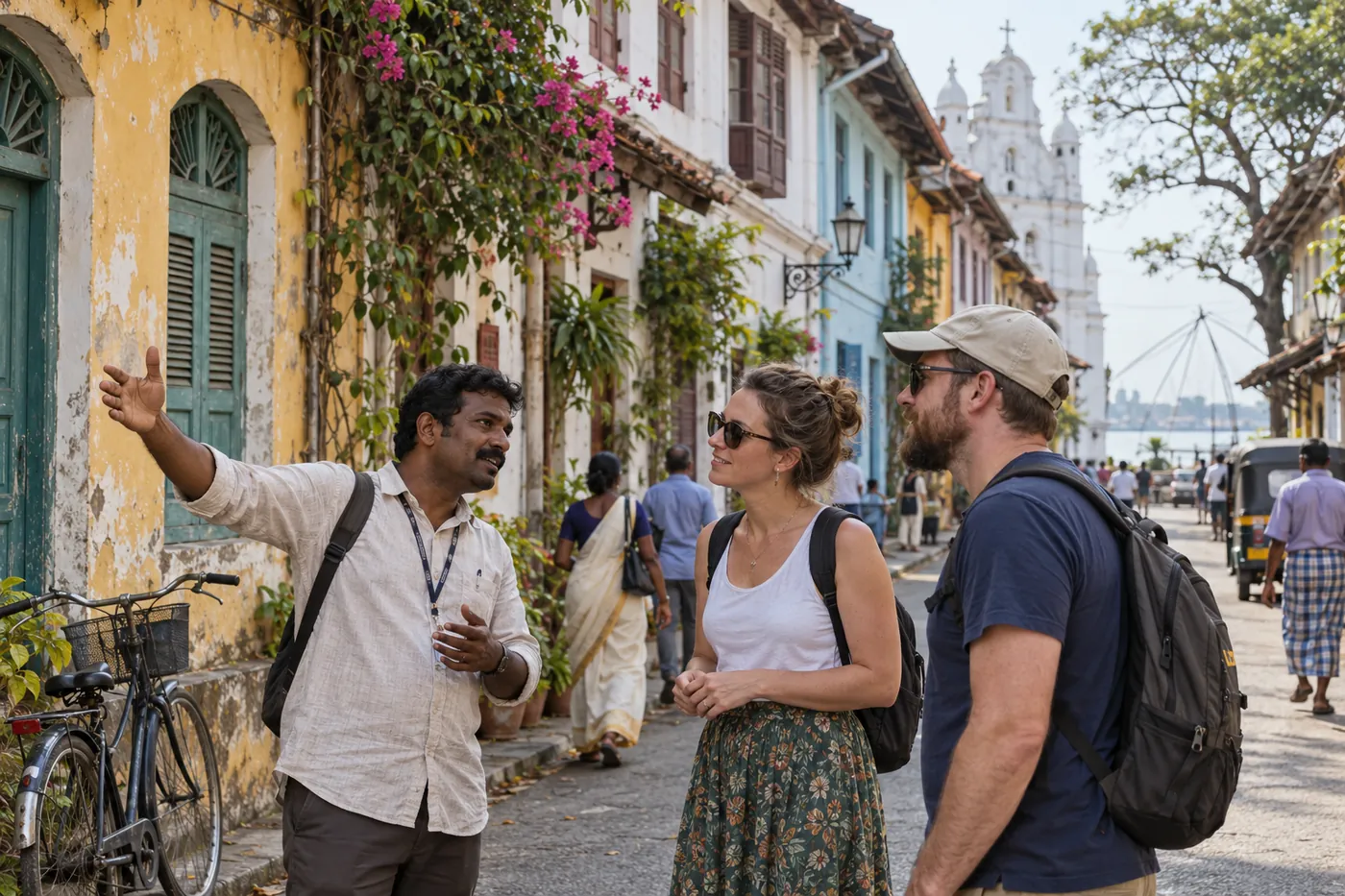
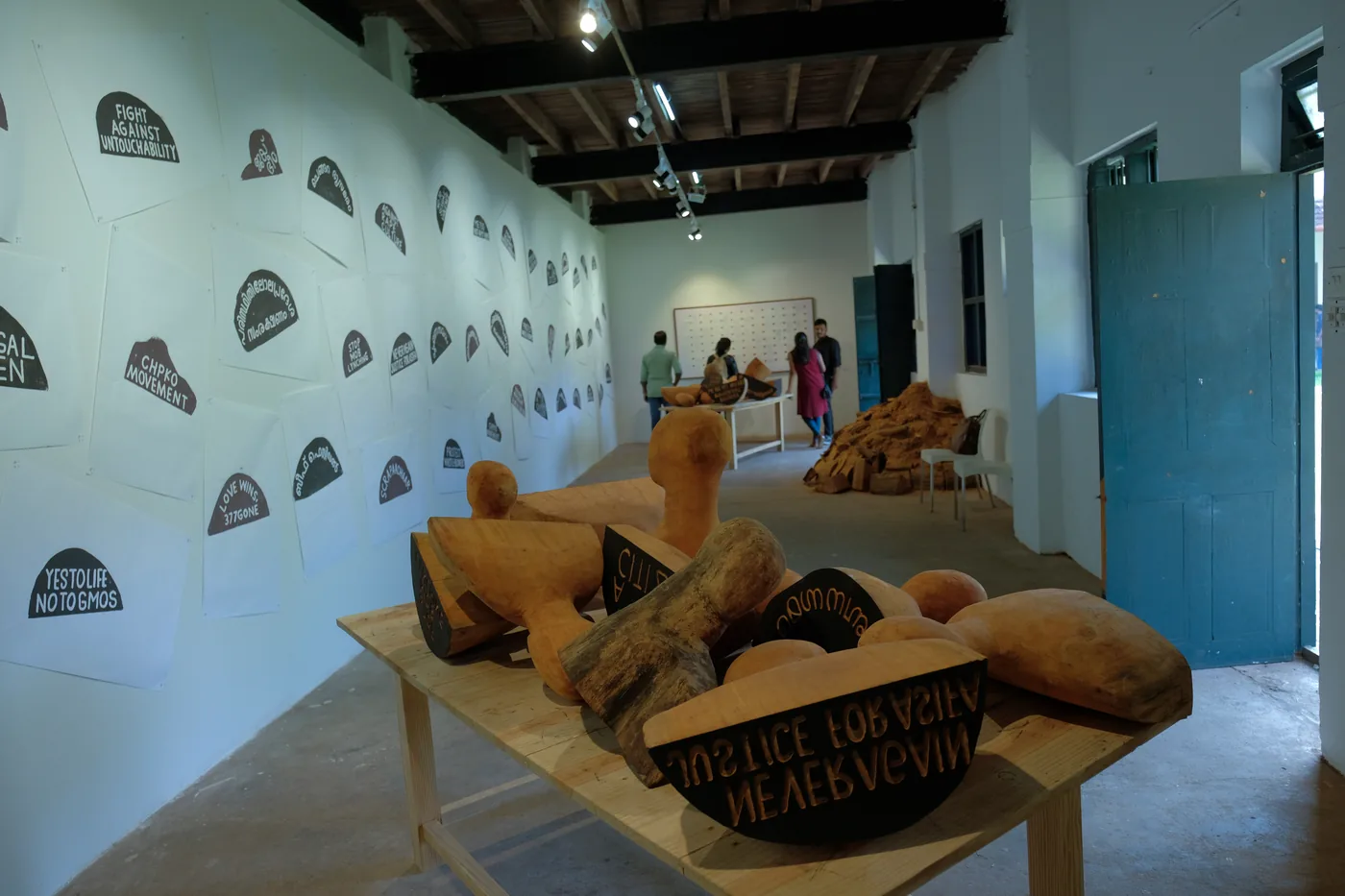
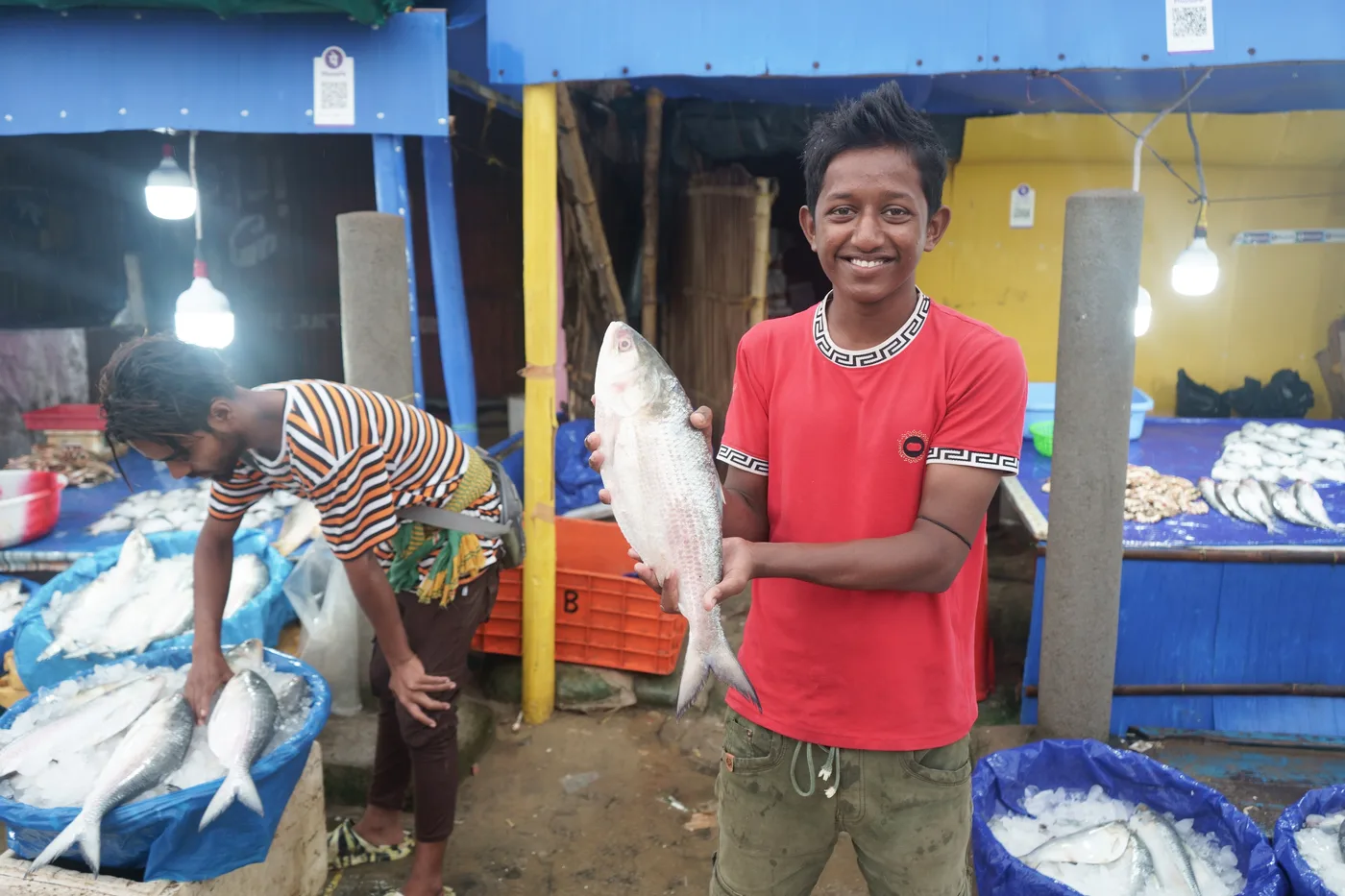
Fort Kochi is our home city, and the historian who walks you through it, the Syrian Christian family who host your meal, and the artists whose studios you step into are people we know by name. We extended this journey to five days for one reason — Fort Kochi deserves more than a rushed afternoon, and the wider city is too good to skip. We pace it so you're never herded from sight to sight.
What struck you first, standing at St Francis Church?
That Vasco da Gama was actually buried right there, briefly, before his remains were moved to Lisbon, and our historian pointed to the exact spot on the floor. I've read about these names in history books my whole life. Standing on the actual stone felt completely different from reading about it, in a way I hadn't expected.
And the Chinese fishing nets — did they live up to the postcard version?
More than that, because we saw them actually worked, not just posed under. Four or five men hauling this huge cantilevered contraption using nothing but counterweights and rope, exactly as it's apparently been done for centuries. It's slow, physical, real work, and watching it at sunset with the light on the water was the best free show I've ever seen.
Tell me about the synagogue.
Tiny, and completely unexpected, Belgian chandeliers hanging over hand-painted Chinese floor tiles, and scrolls that are five hundred years old kept just metres from where I was standing. Our guide explained the Jewish community here is down to a handful of people now, and somehow that made the whole room feel more precious rather than like a museum piece.
What about the murals at Mattancherry Palace?
The scale of the detail, honestly. Entire walls telling the Ramayana in these dense, intricate scenes, and the colours still visible after centuries. I stood in front of one panel for what must have been ten minutes just following the story across it, and our guide had to come back for me.
Was there a smell or a sense that really placed you in the history?
The spice warehouses, definitely. Walking into one and getting hit with this thick, centuries-deep smell of pepper and cardamom stacked in sacks, and realising this exact trade is the reason half of the buildings around us exist at all. The Portuguese, the Dutch, the British, all of it traces back to that smell.
How did the trip end for you?
Breakfast at a family cafe that's been open for a hundred years, on Princess Street, watching the town properly wake up. Five days earlier Fort Kochi had been a name on an itinerary. By the end it felt like a place I'd actually lived in for a week, layered with more history than I knew how to hold onto.
Add any of these to your plan — they carry through to your enquiry.
Every Raw India Experience begins with a conversation. Tell us what you're looking for — we'll design the rest. No payment is taken here.
A confirmation is on its way to your inbox, and a member of our team will personally reply within 24 hours.
Your data will be secured with us. We will not use it for any promotional activities, and we will delete the data after 100 days of non-communication.
Planning your dates? See when to visit Kerala, month by month, or read Kerala in December, when Christmas comes to Fort Kochi.