Gallery
The plants behind Ayurveda, identified one by one.
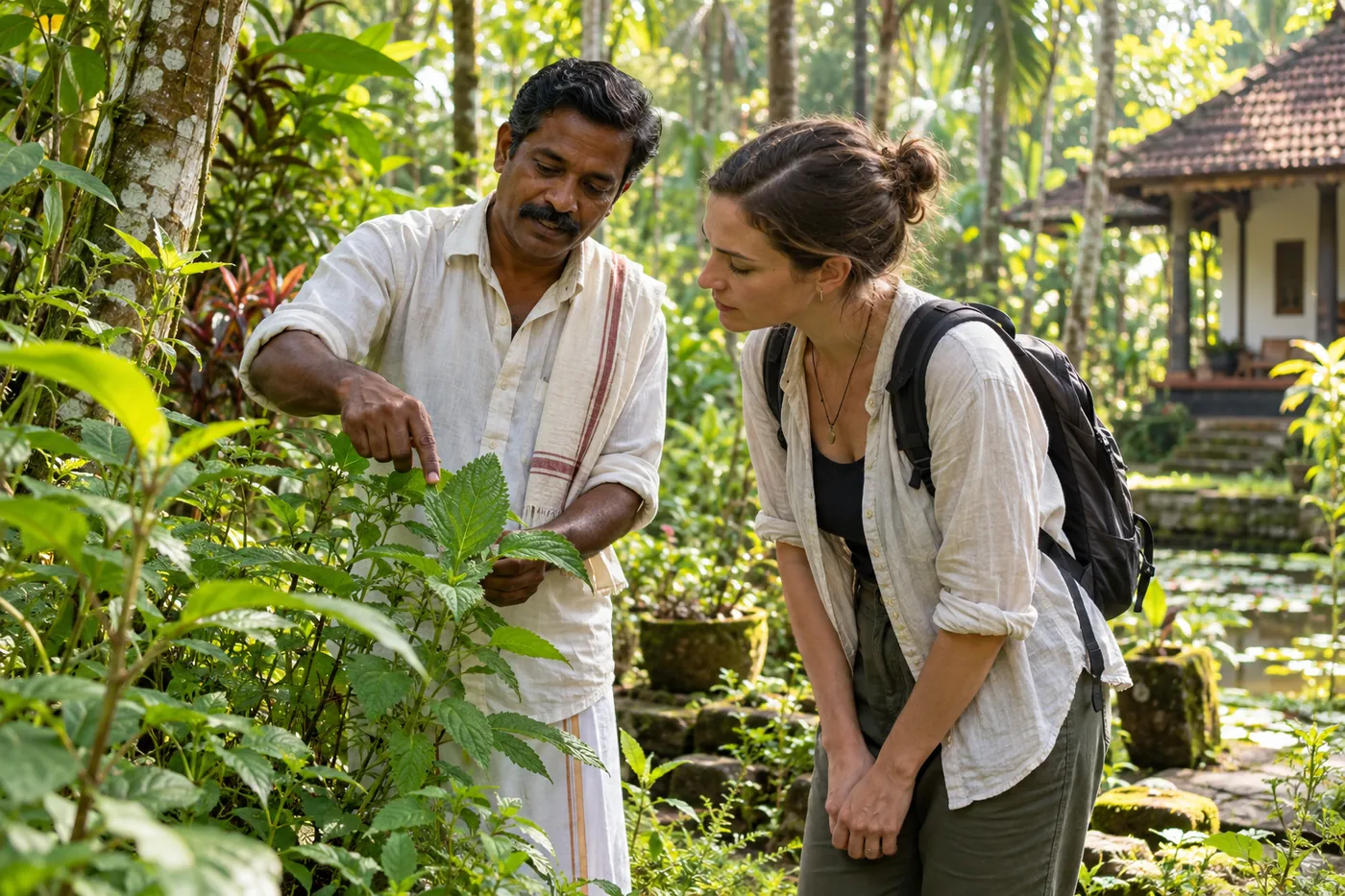
Ayurveda's pharmacy grows in the ground — a herbal garden walk identifies the specific plants used in traditional medicine, leaves crushed and smelled, and what each one is understood to treat, from a practitioner who learned this knowledge the way it's always been passed on.
Kerala is one of the great homes of Ayurveda, and Ayurveda is, at its root, a plant tradition. In a traditional Kerala household, you'll find tulsi, holy basil, growing at the courtyard entrance; neem and other useful plants nearby; and a kitchen where turmeric, ginger and pepper play as many roles as they do in a pharmacy. A herbal garden walk puts you inside that world.
Your guide walks you through a garden of medicinal plants, introducing them one by one: what they look like, how they smell and taste, and how they've traditionally been used. You'll meet tulsi, brahmi, which is traditionally associated with memory and mental clarity, and many others, and learn how Ayurvedic practitioners use leaves, roots, bark and flowers in oils, teas and preparations. You're encouraged to touch, crush and smell.
A responsible note: this is a walk about traditional knowledge and plants, not medical advice. Please don't eat or use any plant without your guide's say-so, and tell us about allergies in advance. We keep the group small, the pace slow and the conversation open, so it works for anyone with a curiosity about plants, herbs and traditional healing. It pairs beautifully with an Ayurvedic consultation or a massage.
Pairs well with an Ayurvedic consultation for fuller context.
This experience can be added to a fully personalised itinerary — shaped around your dates, your pace and your interests, never a fixed package. Our signature multi-day journeys go further still: accommodation, meals, transfers and a private guide included throughout, so the only thing left to plan is what you want to feel.
What was the first plant that surprised you?
Tulsi, right at the garden entrance, which our guide explained is traditionally grown by the door of almost every Kerala home. I'd heard the word before and had no idea it was this common, unassuming little plant I'd walked past a dozen times without noticing.
Did you actually get to touch and smell things?
Constantly, which I hadn't expected. Our guide kept handing us leaves to crush between our fingers, and the smells were sharper and more specific than I'd imagined, nothing like the dried version in a supplement bottle.
Was there a plant with a story that stuck with you?
Brahmi, traditionally linked to memory and clarity, apparently. Our guide half-joked that we should all be chewing it before exams, and I've genuinely thought about that plant more than I expected to since getting home.
How did the walk change how you think about the plants around you generally?
I started noticing ordinary-looking greenery everywhere for the rest of the trip, wondering if it had a use I didn't know about. That's a strange souvenir from a garden walk, but it's the one I actually kept.
Every Raw India Experience begins with a conversation. Tell us what you're looking for — we'll design the rest. No payment is taken here.
A confirmation is on its way to your inbox, and a member of our team will personally reply within 24 hours.
Your data will be secured with us. We will not use it for any promotional activities, and we will delete the data after 100 days of non-communication.