Gallery
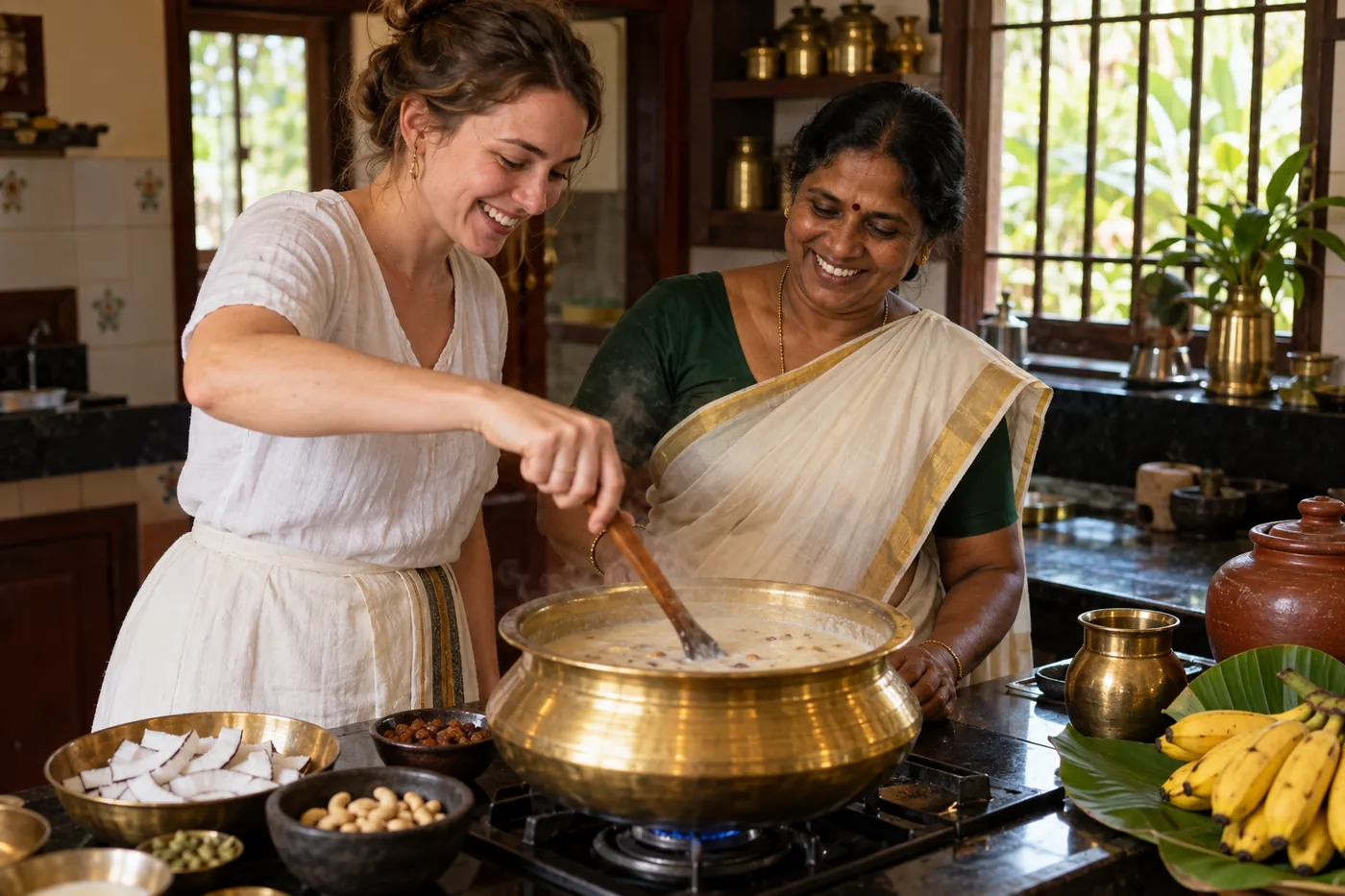
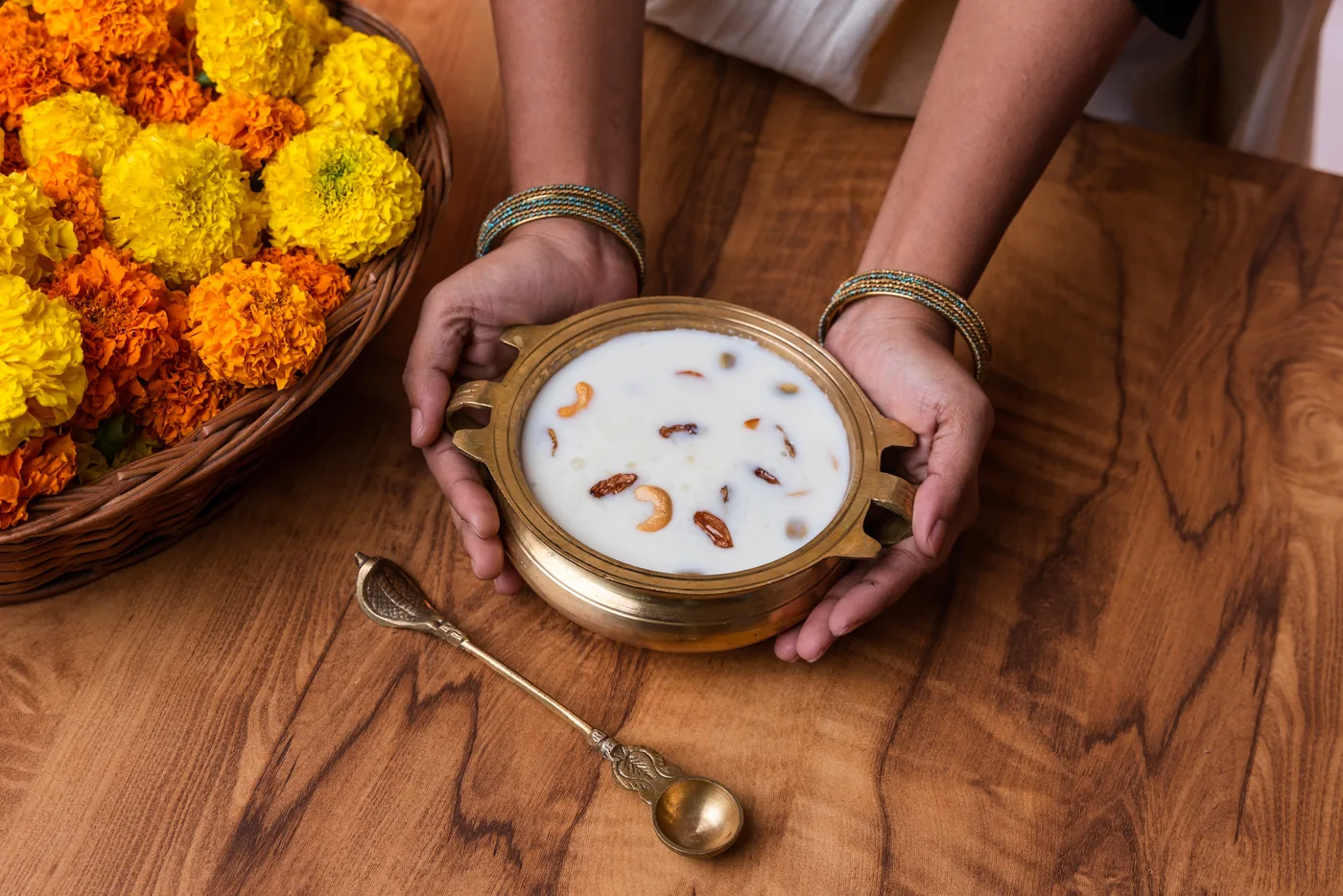
Payasam, made the way it's meant to be made.
Kerala's sweets and payasam take patience most kitchens don't have time for anymore — slow-roasted rice, coconut milk added in careful stages, the kitchen filling with the smell of cardamom and ghee. A local cook walks you through making them properly, start to warm, sweet finish.
Some of Kerala's best-loved sweets are, frankly, a lot of work. Payasam, the milky or jaggery-based pudding that ends every festive meal, is stirred in a wide, heavy, bronze pot called an uruli, often for a long time and always with attention. Palada pradhaman is made with rice flakes cooked slowly in milk until it turns a soft pink, while others use coconut milk and jaggery. There are lentil, banana, jackfruit and sweet potato versions too.
On this session, a local cook walks you through making them properly. You'll see how the grains or flakes are prepared, how the milk is reduced, how the jaggery or sugar is added at the right moment, and why patience matters more than any special ingredient. The kitchen smells of cardamom and ghee, and by the end everyone is hungry.
Payasam and traditional sweets sit at the heart of Kerala's festivals, and this session is especially relevant around Onam, though it runs all year. You taste what you make, still warm. We'll match you with a cook who enjoys teaching, and we keep the group small so everyone gets stirring time. Let us know about dairy, nut or sugar restrictions so we can plan around them.
The payasam recipe changes slightly by season and occasion -- ask what's being made and why.
This experience can be added to a fully personalised itinerary — shaped around your dates, your pace and your interests, never a fixed package. Our signature multi-day journeys go further still: accommodation, meals, transfers and a private guide included throughout, so the only thing left to plan is what you want to feel.
What surprised you about how much work goes into payasam?
The stirring, mostly, done in this huge, heavy bronze pot that our cook called an uruli, and apparently needing constant attention for far longer than I expected. My arm gave out well before hers did.
Was there a moment where the dish actually transformed?
Watching the rice flakes turn the milk a soft pink as it slowly cooked down, which our cook said takes patience more than any special ingredient. I kept expecting to speed it up somehow, and she kept telling me, gently, to just wait.
What did the kitchen smell like by the end?
Cardamom and ghee, thick in the air, the kind of smell that makes you hungry before you've even tasted anything. By the time we sat down I think everyone in the room had asked at least twice how much longer it would be.
How did it taste, still warm?
Better than anything I've had from a restaurant claiming the same dish. Our cook explained payasam is really a festival food, made this carefully for Onam, and I understood by the last spoonful why people build an entire celebration around getting it right.
Every Raw India Experience begins with a conversation. Tell us what you're looking for — we'll design the rest. No payment is taken here.
A confirmation is on its way to your inbox, and a member of our team will personally reply within 24 hours.
Your data will be secured with us. We will not use it for any promotional activities, and we will delete the data after 100 days of non-communication.