Gallery
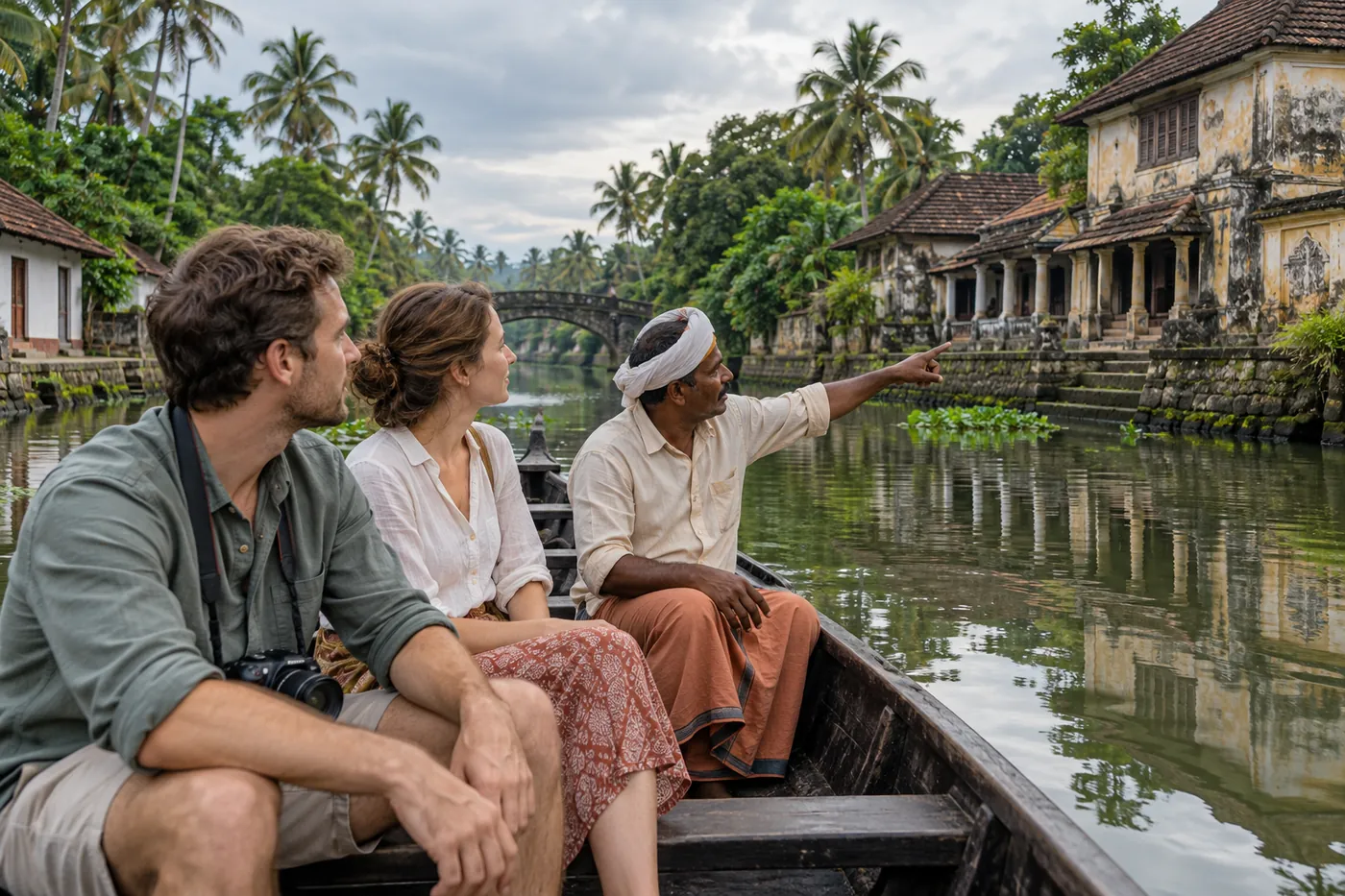
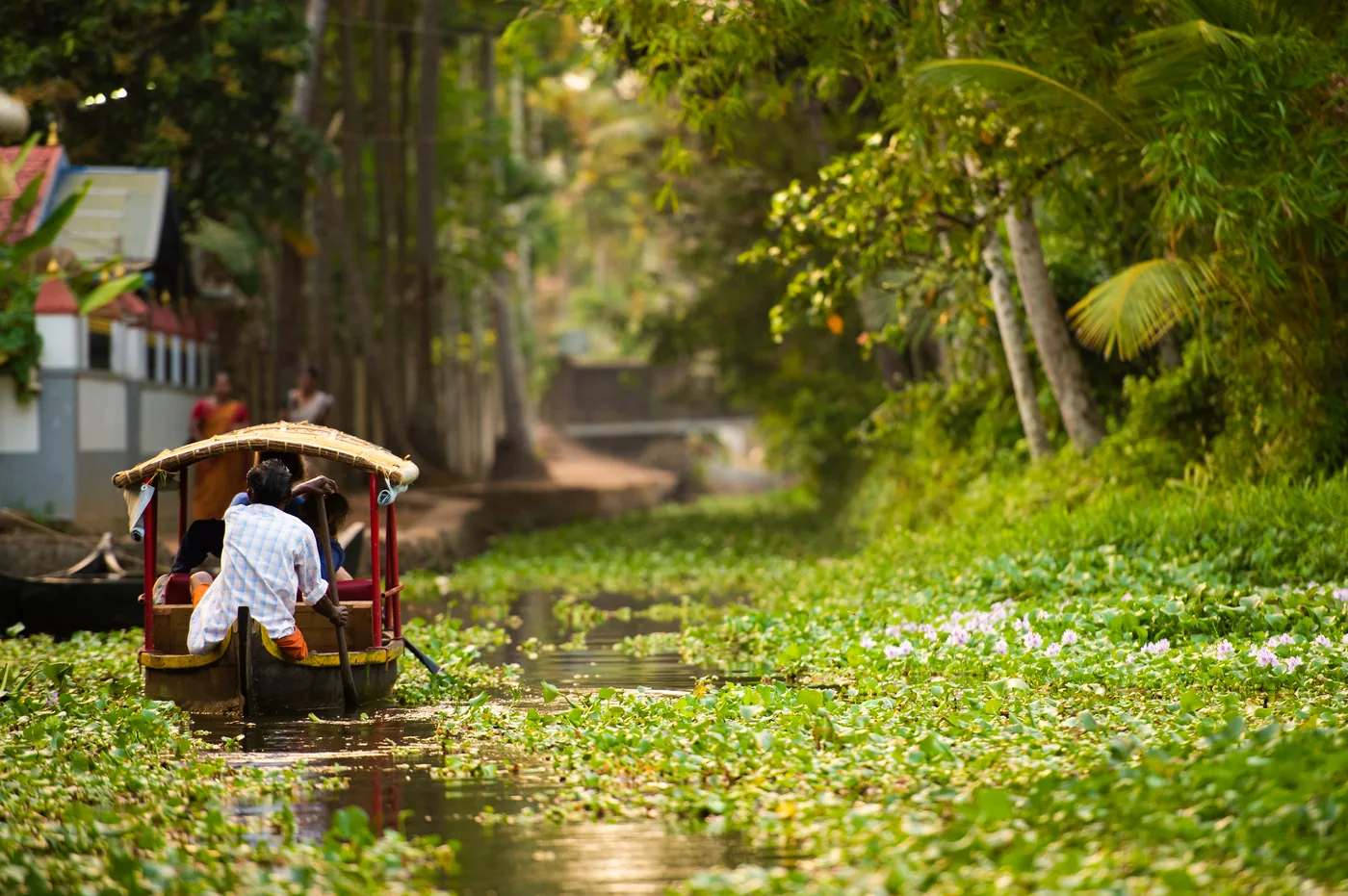
Waterways with centuries of farming and trade history behind them.
Kuttanad's canals aren't just scenic — they're the arteries of a farming and trading system centuries in the making, still carrying goods and people the way they always have. A heritage trail through them connects the landscape to that longer, quietly remarkable story.
Look at a map of Kuttanad and you see a network of waterways. Look at it through a heritage lens and you see history: a landscape that was engineered by generations of farmers, a trade route that carried rice and spices to the coast, and a set of villages, churches and temples spread along the water. It's one of the few regions in the world where rice is grown below sea level, and the United Nations' Food and Agriculture Organization recognises it as an agricultural heritage system.
This trail is a three-hour boat journey through that story. You'll pass paddy fields held back by earthen bunds, houses on the waterfront, and the traditional boats that have served as the region's transport for centuries. Your guide explains how the land was reclaimed, why the rice barges, known as kettuvallams, were so important, and how the same boat design evolved into today's houseboats. Along the way, you'll see village life at boat speed.
December to February usually offers the clearest skies, and the landscape is at its most photogenic then. The pace is slow, the boat is comfortable and there's time for questions. We choose the route to give you the historical layers and the living village together. If you enjoy landscapes with stories, and want to understand why Kuttanad matters, this is the way to do it.
Best combined with a paddy field walk for fuller context on the region.
This experience can be added to a fully personalised itinerary — shaped around your dates, your pace and your interests, never a fixed package. Our signature multi-day journeys go further still: accommodation, meals, transfers and a private guide included throughout, so the only thing left to plan is what you want to feel.
What did the boat journey teach you about the landscape?
That the whole region is essentially engineered, our guide explained, reclaimed rice fields held below sea level by bunds built entirely by hand over generations. From the water you can actually see how deliberate the whole system is.
Was there a specific boat detail that stuck with you?
Learning that the traditional rice barges, the kettuvallams, are the direct ancestors of the houseboats everyone associates with Kerala now. I'd always thought of houseboats as a tourism invention. They're not, they evolved from real working cargo boats.
How did the slow pace of the boat change the day?
Completely, in the best way. Three hours felt unhurried rather than long, plenty of time for questions, and the landscape unfolding at boat speed let details register that a faster trip would have blurred past.
What's the thing you understood by the end that you hadn't at the start?
Why this specific stretch of Kerala is recognised internationally as an agricultural heritage site. Before the trip it was just a pretty word on a map. After it, I understood the actual, hand-built history behind it.
Every Raw India Experience begins with a conversation. Tell us what you're looking for — we'll design the rest. No payment is taken here.
A confirmation is on its way to your inbox, and a member of our team will personally reply within 24 hours.
Your data will be secured with us. We will not use it for any promotional activities, and we will delete the data after 100 days of non-communication.