Gallery
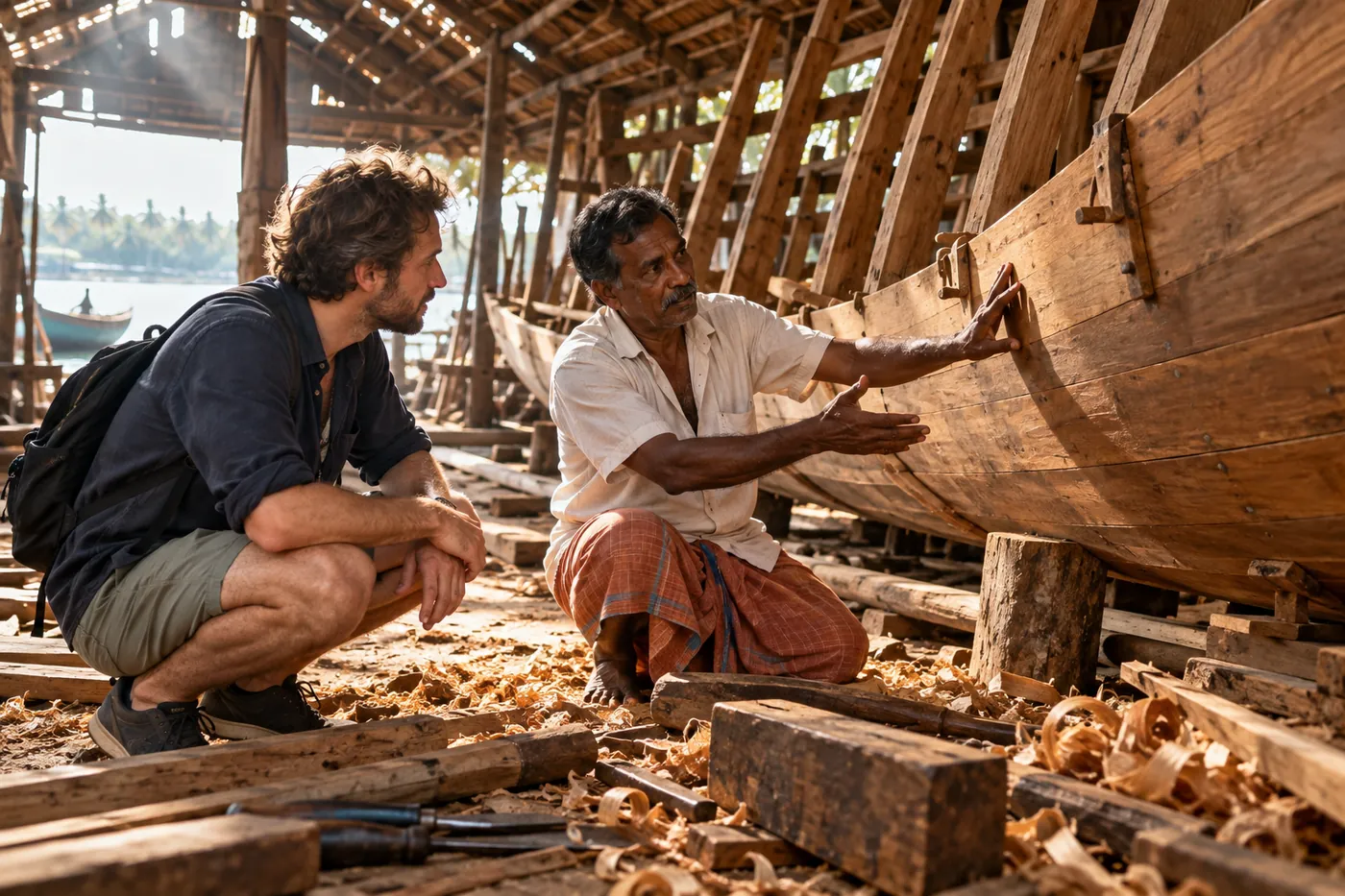
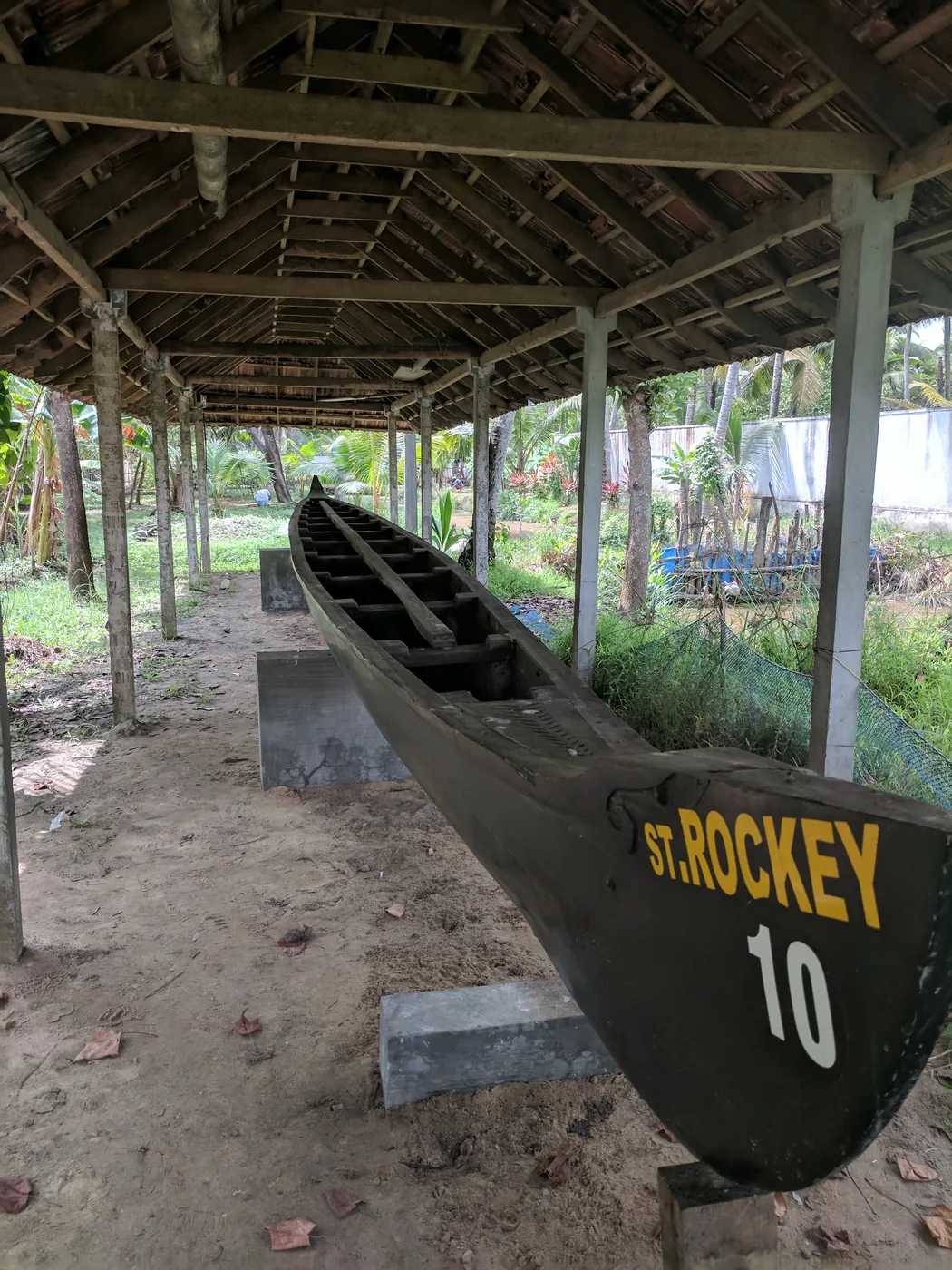
Wooden boats, still built entirely by hand.
Kerala's traditional wooden boats — from small canoes to snake boats — are still built by hand in village workshops, the smell of fresh-cut timber and coir rope thick in the air, using techniques passed down through generations of craftsmen who measure by eye, not blueprint.
The long, elegant snake boats that race on Kerala's backwaters have a hidden secret: they are built without a single nail. The hulls are made from anjili, a wild jackfruit timber that resists rot in water, and the planks are tied together with coconut fibre. The result is a hull that flexes rather than cracks, which is exactly what you want in a boat that carries more than a hundred rowers at speed.
A master carpenter, known as a moothashari, directs the work, and the knowledge is carried in oral tradition and generations of practice. The finished boats are sometimes over a hundred feet long, with a stern that rises high behind the rowers like a serpent's raised hood. Watching this craft up close, the planks, the coir lashings and the measurements made by eye, gives you a new respect for what you see on race day.
A boat builder's workshop is a working site, so the visit is a guided look at the craft: the wood, the tools, the joints and the stories, and a chance to talk to the builders. We keep the group small and ask you to stay clear of tools and work areas. The workshop's projects vary, and we can't promise you'll see a snake boat in progress, but you will see people who know how to build a boat the traditional way. Wear closed shoes and expect sawdust.
Timing near a boat's completion is especially rewarding — ask us about current builds.
This experience can be added to a fully personalised itinerary — shaped around your dates, your pace and your interests, never a fixed package. Our signature multi-day journeys go further still: accommodation, meals, transfers and a private guide included throughout, so the only thing left to plan is what you want to feel.
What's the detail about the snake boats that surprised you most?
That they're built without a single nail, our guide explained, the planks tied together with coconut fibre instead. I'd watched snake boat races on video before this trip and had no idea the hulls were held together that way.
Did you get to see one actually being worked on?
Partially, a boat mid-construction, with the master carpenter making measurements by eye rather than any visible tools I recognised. Our guide said that generational knowledge is basically all oral, passed down rather than written.
Was there a moment the scale of the craft hit you?
Standing next to a hull that stretched further than I could see in one glance, knowing it would eventually carry over a hundred rowers at speed. Up close, unfinished, it looked less like a boat and more like a piece of architecture.
How did the visit change how you'll watch a race in future?
Completely. I used to just see speed and spectacle. Now I know I'll be looking at the hull itself, thinking about coconut fibre lashings and a craftsman who built it entirely by feel.
Every Raw India Experience begins with a conversation. Tell us what you're looking for — we'll design the rest. No payment is taken here.
A confirmation is on its way to your inbox, and a member of our team will personally reply within 24 hours.
Your data will be secured with us. We will not use it for any promotional activities, and we will delete the data after 100 days of non-communication.