Gallery
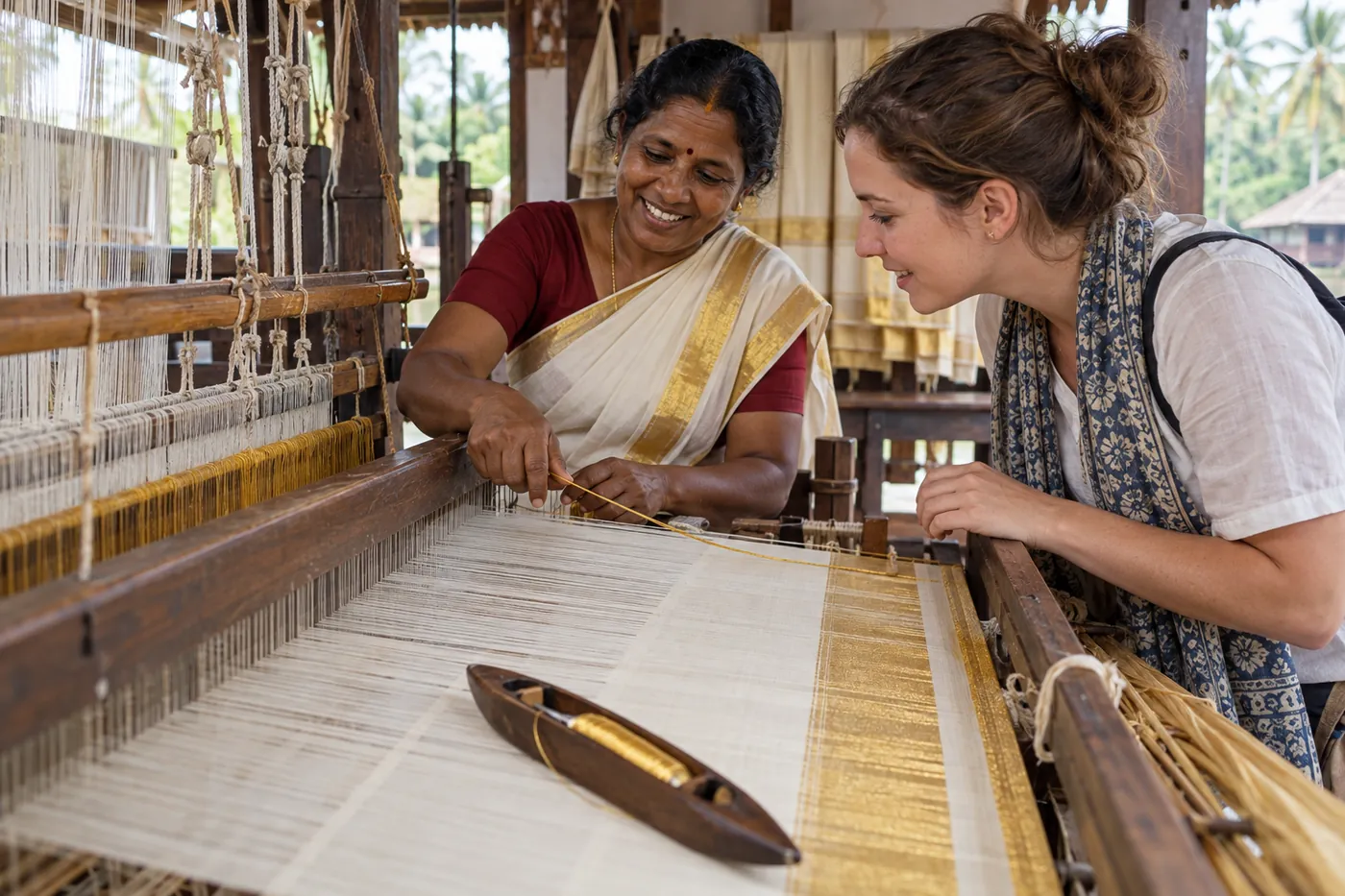
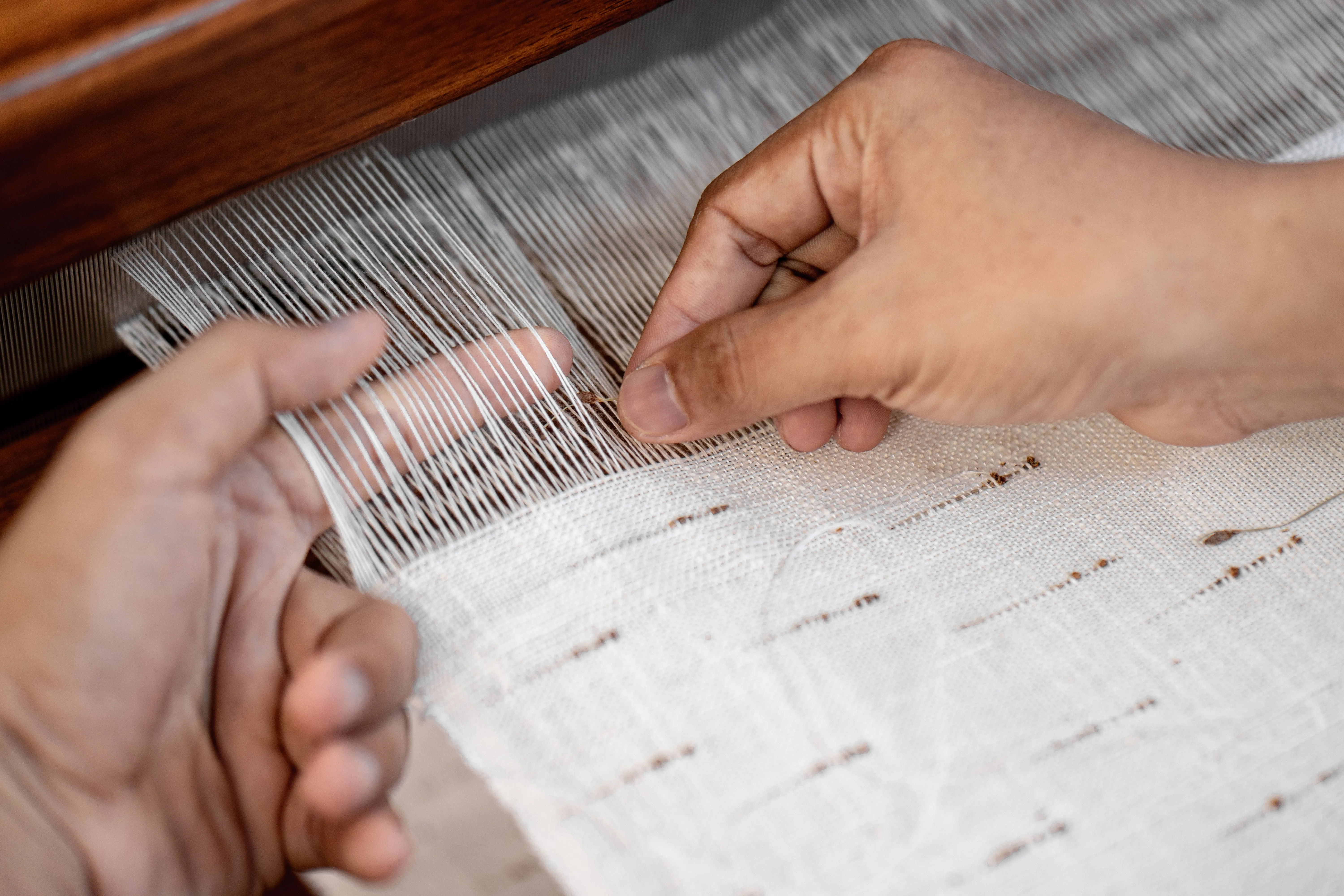
The loom behind Kerala's iconic gold-bordered sari.
The Kasavu sari's simple cream-and-gold look belies the skill on the loom behind it — hundreds of tiny, exact movements building a border thread by thread. Visit a working weaving centre to see the threading, the shuttle work, and the patience a single sari demands from the person making it.
The sound comes first: a rhythmic clack and slide of a wooden handloom, repeated thousands of times a day. Then you see it, a weaver's hands moving thread through thread, building cloth line by line. Kerala's handlooms make the famous kasavu, the cream or off-white cloth with a golden border that's worn on Onam, Vishu and many other festive days.
Chendamangalam, near Kochi, is one of the centres of this tradition, and its handlooms are recognised with a Geographical Indication tag. The craft is generational: families have woven here for years, often in small, home-based workshops, passing techniques from parents to children. Kasavu itself is made from fine cotton with a zari, or gold-thread, border, and every stripe is planned and counted.
On this visit, you meet weavers at work, see how warp and weft come together, and learn what separates handloom from powerloom. It's a quiet, absorbing hour and a half, and if you'd like to buy cloth, weavers can explain quality and price fairly. Handloom is a livelihood under pressure, and the visit gives weavers direct access to travellers who value the work. We don't push sales, and you're free to simply look.
Ask about buying directly from the weavers — it supports the craft more directly than retail.
This experience can be added to a fully personalised itinerary — shaped around your dates, your pace and your interests, never a fixed package. Our signature multi-day journeys go further still: accommodation, meals, transfers and a private guide included throughout, so the only thing left to plan is what you want to feel.
What did you notice before you even saw the loom?
The sound, this rhythmic clack and slide from somewhere in the house, repeated so steadily it took me a second to place it as a person working rather than a machine.
Was the weaver's speed as impressive as you'd expect?
More. Thread moving through thread almost too fast to follow, and our guide explained every stripe in the border is planned and counted in advance, nothing improvised. I couldn't imagine keeping that count in my head while my hands moved that fast.
Did you understand why kasavu matters so much here?
Completely, once I saw it being made rather than just worn. Knowing that gold border is real zari thread, woven by hand, changed how I look at the fabric everyone wears at Onam. It's not just a pattern, it's genuinely hours of somebody's skilled labour.
What was the mood of the visit like?
Quiet and unhurried, no pressure to buy anything at all. We just sat and watched, asked questions when they came to us, and left with a much better understanding of cloth I'd have otherwise just admired from a distance.
Every Raw India Experience begins with a conversation. Tell us what you're looking for — we'll design the rest. No payment is taken here.
A confirmation is on its way to your inbox, and a member of our team will personally reply within 24 hours.
Your data will be secured with us. We will not use it for any promotional activities, and we will delete the data after 100 days of non-communication.