Gallery
Kerala's classical dance of grace, hands-on.
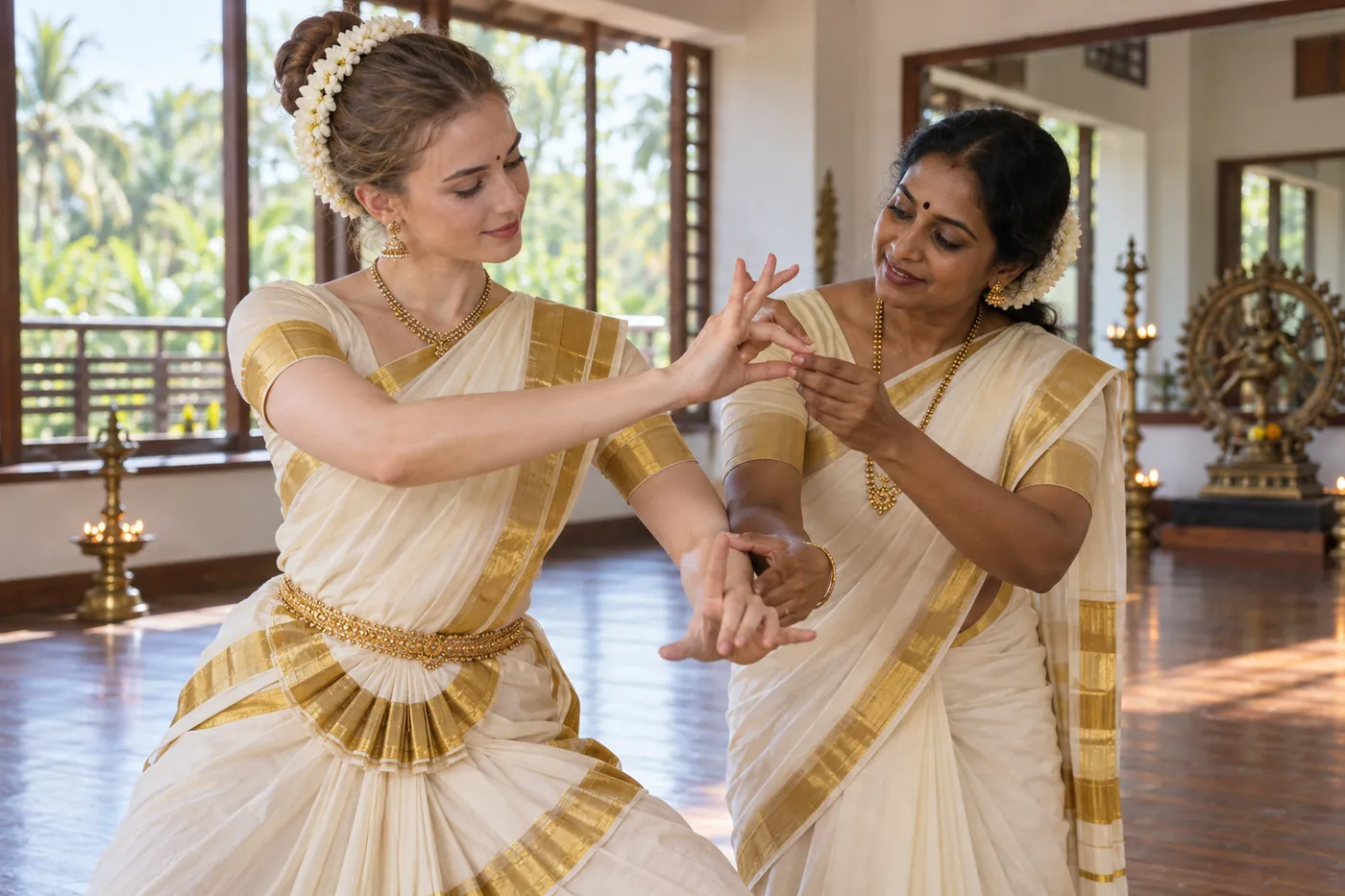
Mohiniyattam's slow, fluid movements take years to master, but an introductory class reveals the discipline behind the grace — posture, expression, and the storytelling built into every gesture, down to the angle of a wrist. You'll likely never watch classical Indian dance the same way again.
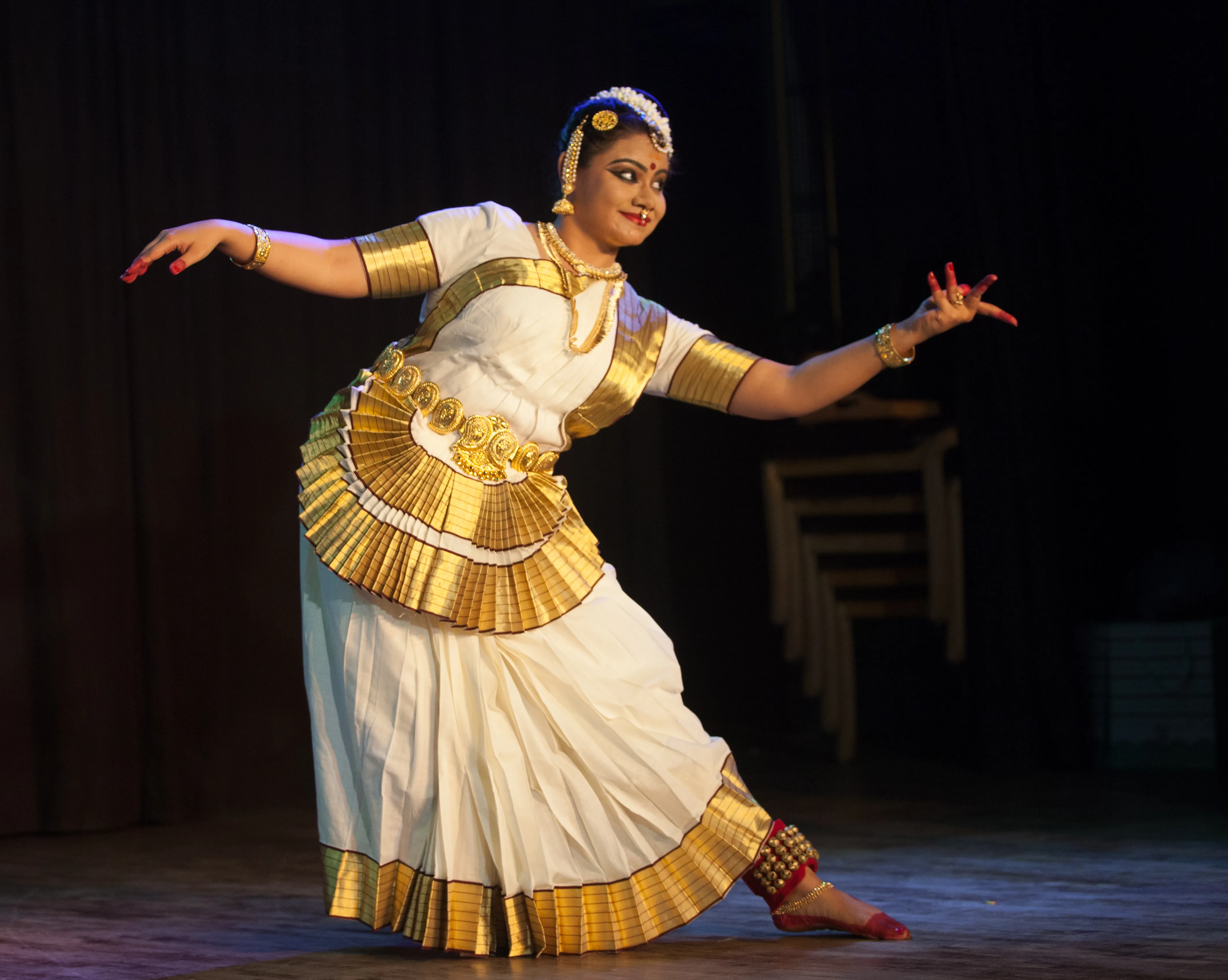
Mohiniyattam means "dance of the enchantress", and it lives up to the name. It's a classical dance of Kerala, traditionally performed as a solo by women, marked by slow, swaying movements that echo palm trees and gentle waves. Where other classical dances are sharp and rhythmic, Mohiniyattam is fluid, lyrical and quietly expressive, telling stories of love, devotion and longing through the face and hands.
The costume is as distinctive as the movement: a cream or white kasavu sari with a golden border, simple gold jewellery and jasmine flowers in the hair. The hand gestures, known as mudras, come from a classical treatise and convey whole ideas with a turn of the fingers. Learning even a few of them changes how you watch the dance.
This is an introductory class with an experienced teacher. You'll learn a little of the posture, the basic movements and a few mudras, and see how they combine to tell a story. Nobody expects a performance. The point is to feel, in your own body, why this dance moves people. It suits anyone with an interest in art, dance or Kerala culture, and it's a gentle, meditative way to spend an hour and a half. Wear something comfortable that you can move in.
Comfortable, loose clothing works best for this session.
This experience can be added to a fully personalised itinerary — shaped around your dates, your pace and your interests, never a fixed package. Our signature multi-day journeys go further still: accommodation, meals, transfers and a private guide included throughout, so the only thing left to plan is what you want to feel.
How did the movement feel different from dance you'd seen before?
Slower and more deliberate, almost like watching someone move underwater. Our teacher said it's meant to echo palm trees swaying, and once she said that I could see it in every gesture, this gentle side-to-side sway running through the whole body.
Did learning the mudras change anything for you?
Completely, in about twenty minutes. A simple turn of the fingers apparently carries a whole idea, and once she taught us two or three, I started noticing hand positions in every temple carving and photograph I saw for the rest of the trip.
What was it like trying it yourself?
Harder than it looked and much more physically demanding than the slow pace suggests. My legs were tired from the controlled bent-knee posture within minutes, and I had a new respect for how much strength that stillness actually requires.
How did watching your teacher perform, after trying it yourself, land differently?
Completely differently. I understood exactly how much control was behind what looked effortless, and the story she told through her face and hands afterwards actually made sense to me, piece by piece, rather than just washing over me as pretty movement.
Part of these journeys: NRI Homecomings
Every Raw India Experience begins with a conversation. Tell us what you're looking for — we'll design the rest. No payment is taken here.
A confirmation is on its way to your inbox, and a member of our team will personally reply within 24 hours.
Your data will be secured with us. We will not use it for any promotional activities, and we will delete the data after 100 days of non-communication.