Gallery
Kerala's temple mural tradition, brush in your own hand.
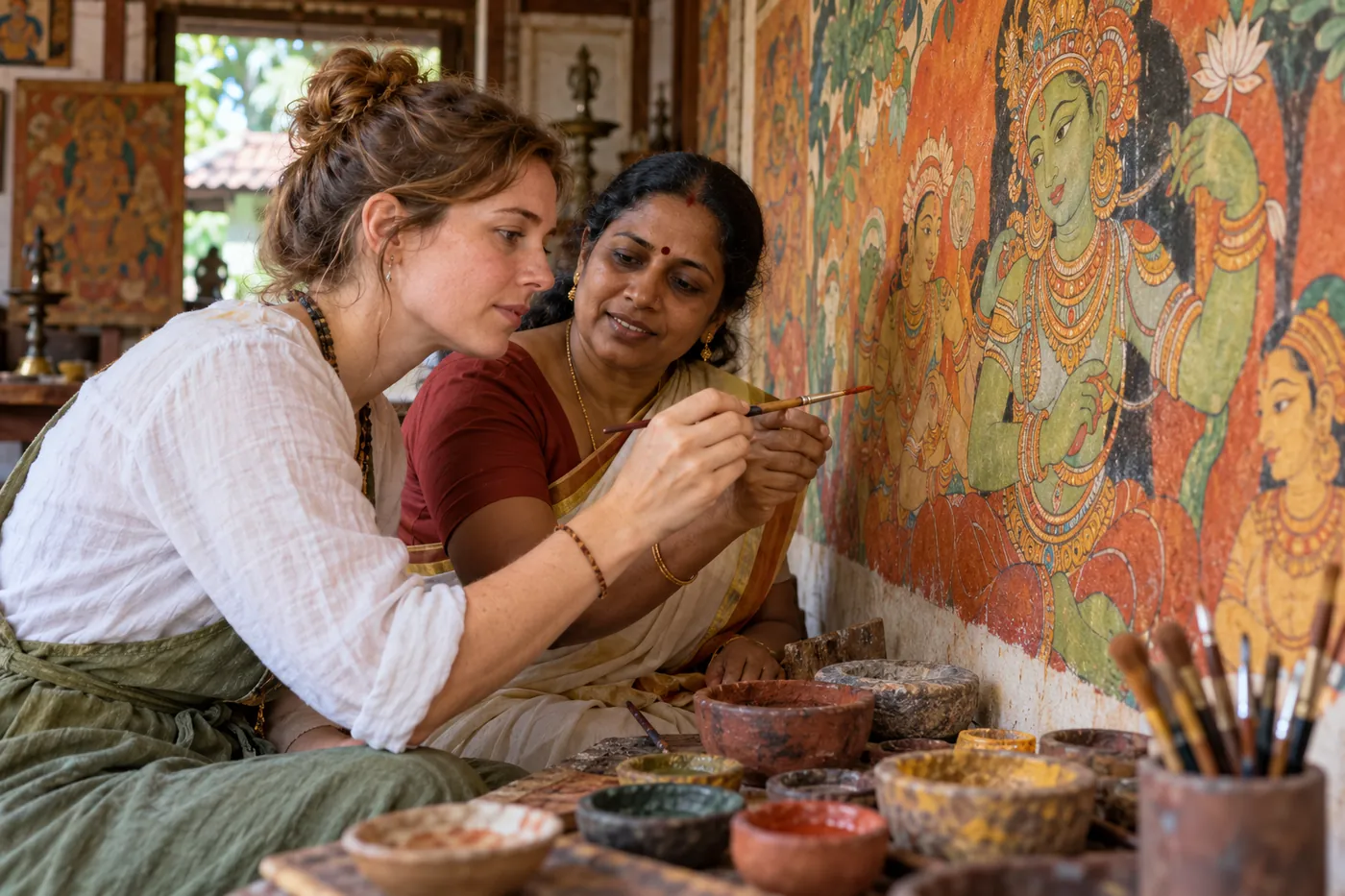
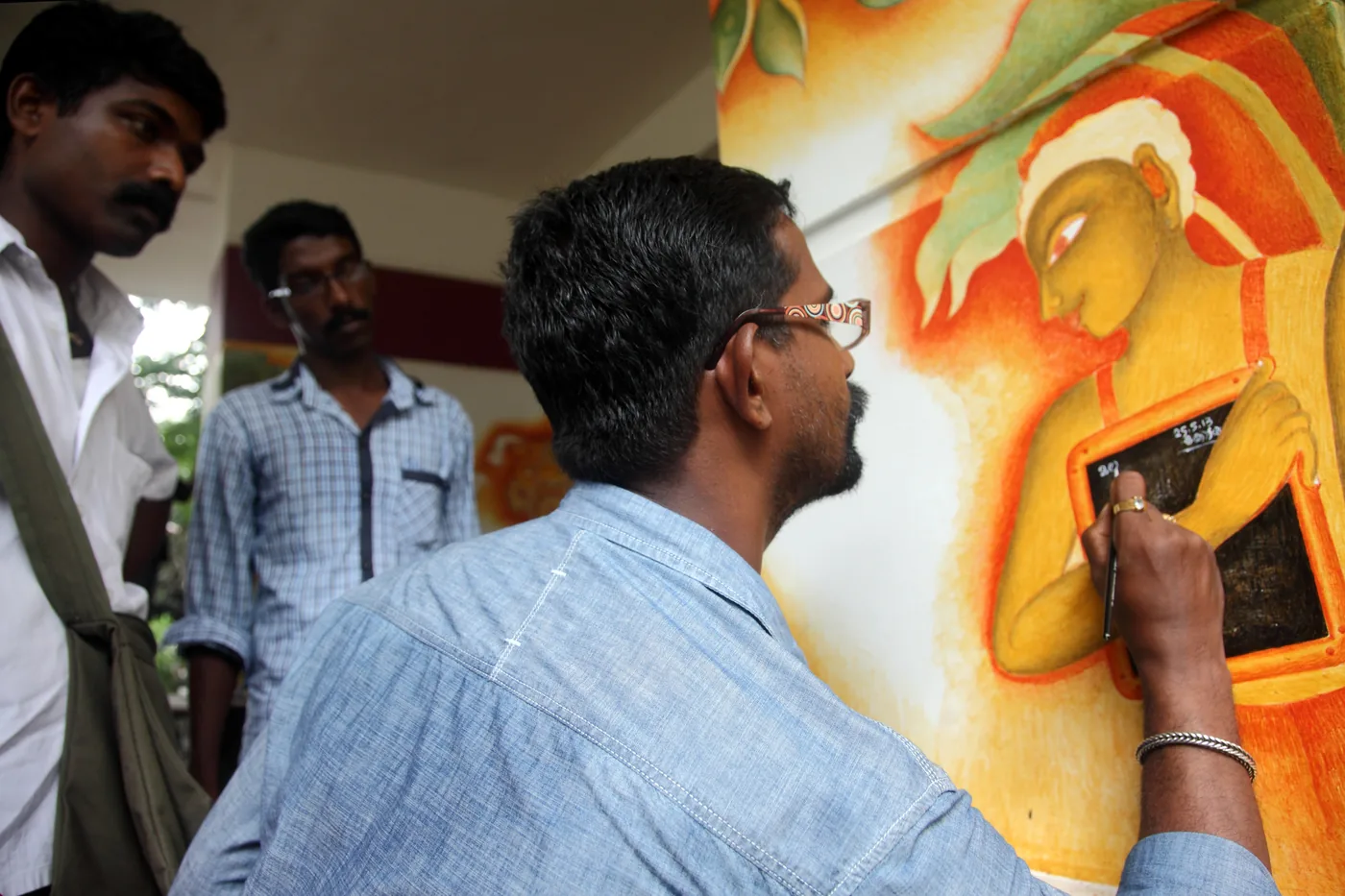
Kerala's mural art — bold, mythological, centuries-old — still decorates temple walls across the state, deep reds and ochres built up in careful layers. A hands-on lesson with a trained mural artist introduces the technique, natural pigments, and symbolism behind it, brush in your own hand from the very first stroke.
Kerala's traditional murals are among the great treasures of Indian art. Deep, saturated colour, flowing lines and large, expressive eyes bring gods, kings and epic stories to life on temple and palace walls, and the most famous of them can be seen at Mattancherry Palace in Kochi, where a room's worth of paintings tells the entire story of the Ramayana.
The craft is built on five colours: red, yellow, green, black and white. Traditionally, the pigments came straight from nature: red and yellow from laterite earth, white from lime, black from lamp soot and green from leaves. Painters bound the colours with natural mediums, and the discipline of the tradition, with its fixed rules for faces, poses and colour, is part of the beauty.
In this lesson, an artist teaches you the fundamentals: the outline, the colour rules and the way faces and eyes are drawn. You then paint a small piece of your own, guided at each step. Nobody expects a masterpiece, and the process is meditative. You leave with a much sharper eye for the murals you see at palaces and temples across Kerala. It suits complete beginners and anyone with a love of art.
No painting experience required — the lesson starts from the basics.
This experience can be added to a fully personalised itinerary — shaped around your dates, your pace and your interests, never a fixed package. Our signature multi-day journeys go further still: accommodation, meals, transfers and a private guide included throughout, so the only thing left to plan is what you want to feel.
What did you learn about the colours before you even picked up a brush?
That traditionally, every one of the five colours came from nature itself, red and yellow from laterite earth, black from lamp soot, white from lime. I'd looked at these murals in palaces without once thinking about where the paint actually came from.
Was the process as calming as it sounds?
Genuinely, yes. There's a rhythm to outlining and filling colour within strict rules that made an hour disappear without me noticing. My hand ached afterwards in a way that felt earned rather than unpleasant.
Did the strict rules bother you as someone with no training?
Not at all, actually, because the artist explained the discipline is part of the beauty, not a limitation. Once I stopped trying to improvise and just followed the rules for how a face and eyes are drawn, my little piece actually started looking like something.
How did the lesson change how you see the murals now?
I went to Mattancherry Palace two days later and stood in front of the Ramayana murals for far longer than I'd planned to. Once you've tried to paint even a small section yourself, you can't walk past that scale of work quickly anymore.
Every Raw India Experience begins with a conversation. Tell us what you're looking for — we'll design the rest. No payment is taken here.
A confirmation is on its way to your inbox, and a member of our team will personally reply within 24 hours.
Your data will be secured with us. We will not use it for any promotional activities, and we will delete the data after 100 days of non-communication.