Gallery
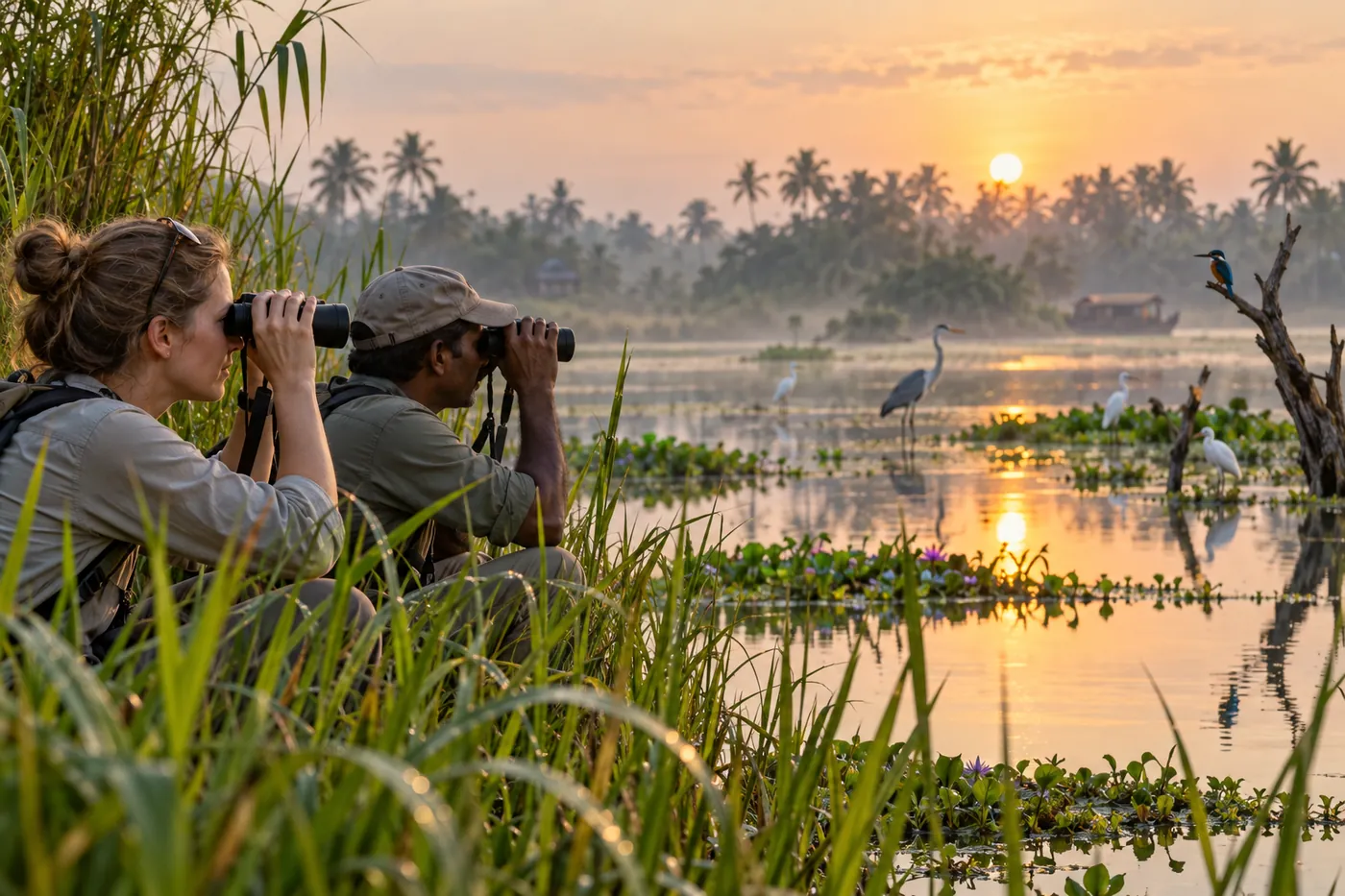
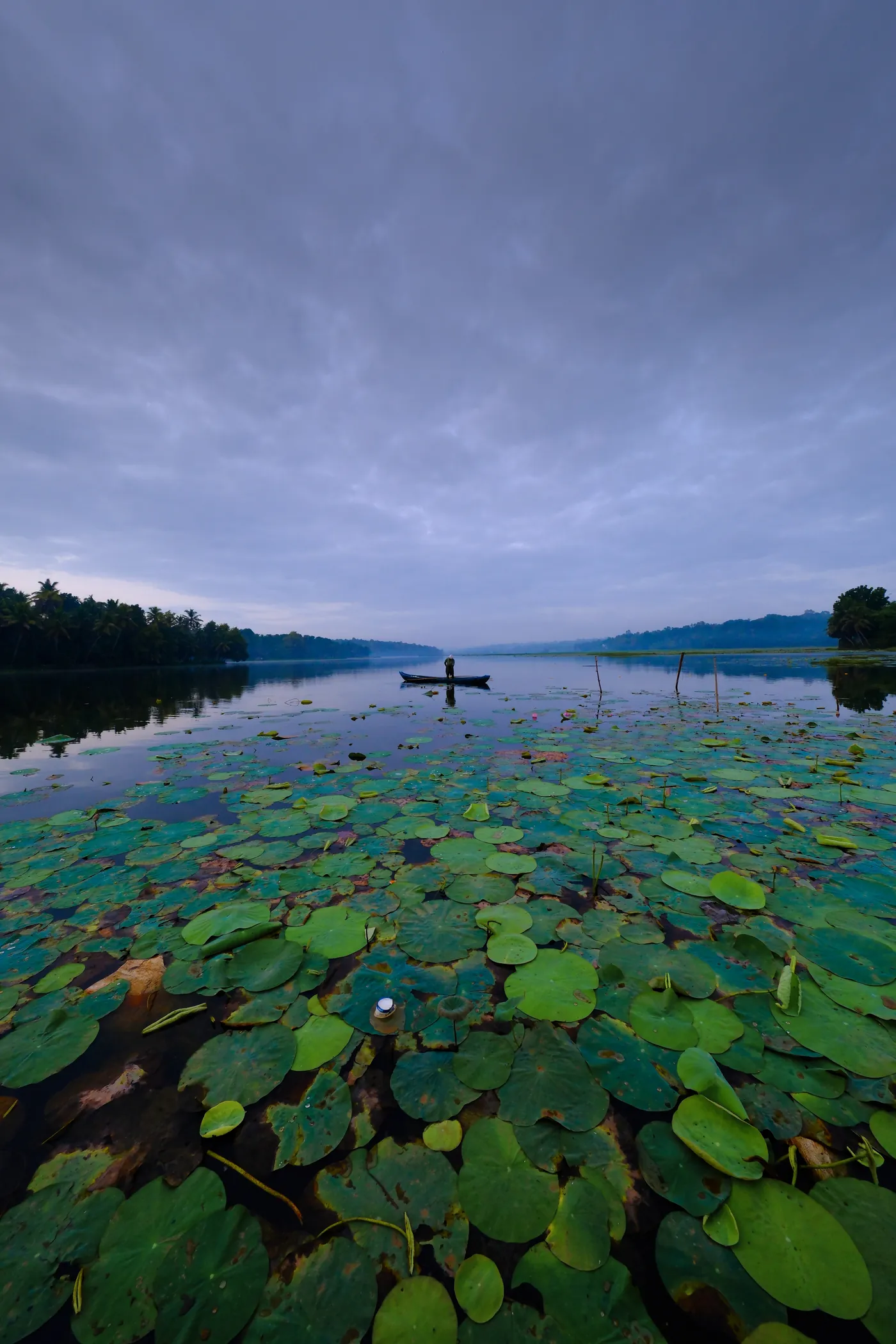
Kerala's wetlands, seen through a serious birdwatcher's eyes.
Kerala's backwaters and wetlands host resident and migratory species most visitors walk past without noticing — a flash of colour in the reeds, a call that means something specific if you know how to listen. A guide who actually knows birdcall from background noise changes what you see entirely.
Kerala's backwaters are one of the best places in southern India to watch waterbirds, and the best hours are the first ones after sunrise. As the air cools and the light turns golden, egrets and herons step through the shallows, kingfishers watch from a branch, cormorants dry their wings on stakes and darters dive and resurface with fish. It's the sort of morning that makes non-birders start carrying binoculars.
Places like Kumarakom, on the edge of Vembanad Lake, are known for resident waterbirds all year and for migratory visitors in winter, roughly November to February, including ducks and flycatchers that arrive from far away. A good guide can read the landscape: where the fish are, which tree the kingfisher favours, how to approach quietly and when to simply wait. You don't need to be an expert; a guide and a pair of binoculars are enough.
We time the outing for the early hours, often by boat or canoe and sometimes on foot along the water's edge. Sightings depend on season and luck, and we'll never promise a particular species, but we'll tell you what's likely. Wear neutral colours, avoid sudden movements and bring insect repellent. If you've never birdwatched before, this is a gentle place to begin, and if you're experienced, your guide will happily go deeper.
Migratory season (roughly Nov–Feb) brings the widest variety.
This experience can be added to a fully personalised itinerary — shaped around your dates, your pace and your interests, never a fixed package. Our signature multi-day journeys go further still: accommodation, meals, transfers and a private guide included throughout, so the only thing left to plan is what you want to feel.
What was the light like that early in the morning?
Golden in a way that made even ordinary birds look dramatic. A kingfisher sat completely still on what our guide said was its usual branch, like it had a regular seat and knew it.
Did you see anything you weren't expecting?
A cormorant drying its wings on a wooden stake, wings spread out like a small dark cross, holding completely still for minutes. I'd seen photos of that pose before and had no idea it actually happens exactly like that in real life.
Were you worried about not knowing anything about birds beforehand?
A little, and it turned out not to matter at all. Our guide just kept quietly pointing things out, an egret here, a darter diving over there, and by the end I was spotting things myself before he'd said anything.
How did the morning change your relationship with birdwatching?
I bought a modest pair of binoculars the week I got home, which is not something I expected to do. There's something about watching birds go about their actual lives, unbothered by you, that's more absorbing than I ever gave it credit for.
Part of these journeys: Family Journeys
Every Raw India Experience begins with a conversation. Tell us what you're looking for — we'll design the rest. No payment is taken here.
A confirmation is on its way to your inbox, and a member of our team will personally reply within 24 hours.
Your data will be secured with us. We will not use it for any promotional activities, and we will delete the data after 100 days of non-communication.