Gallery
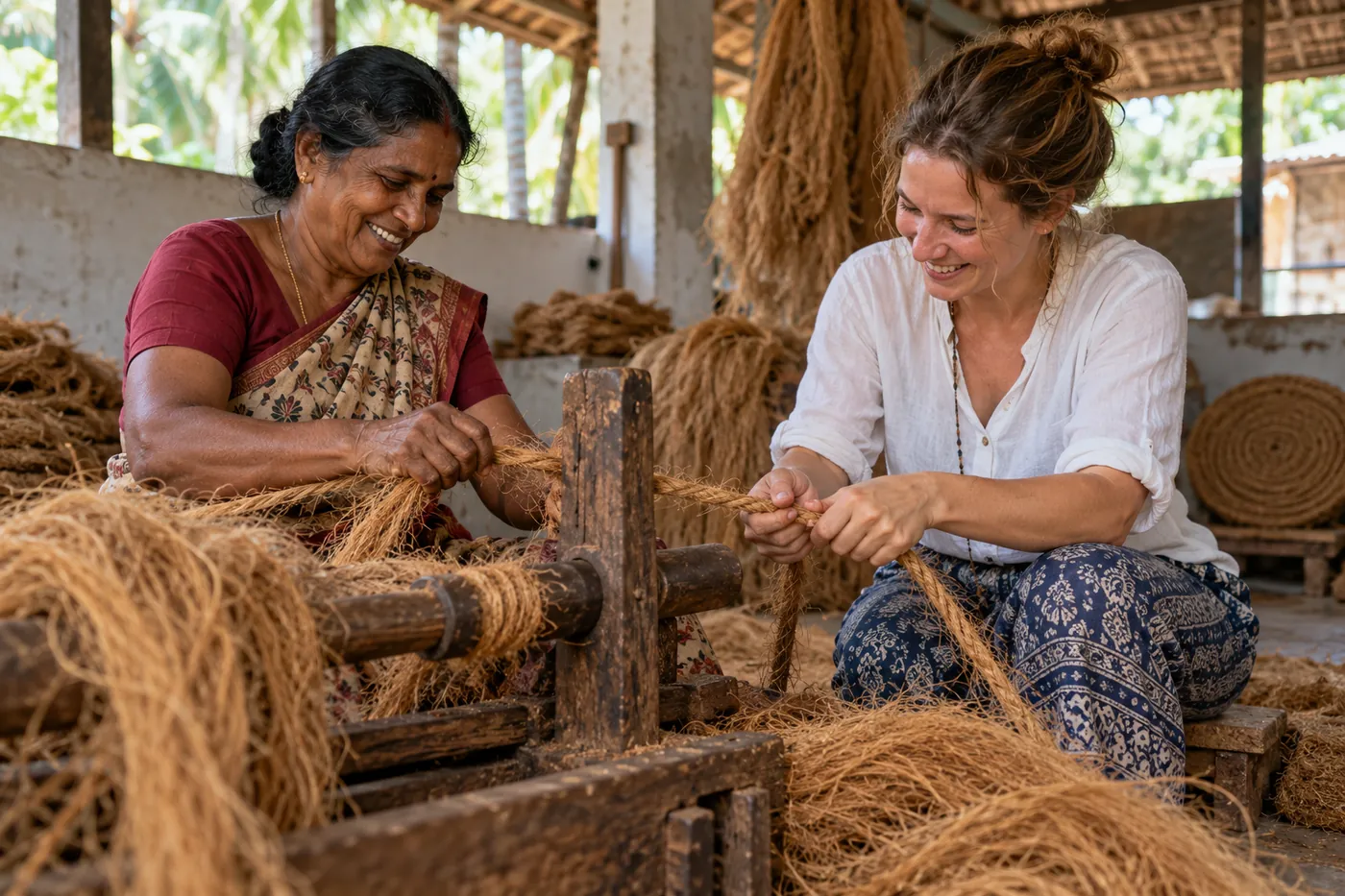
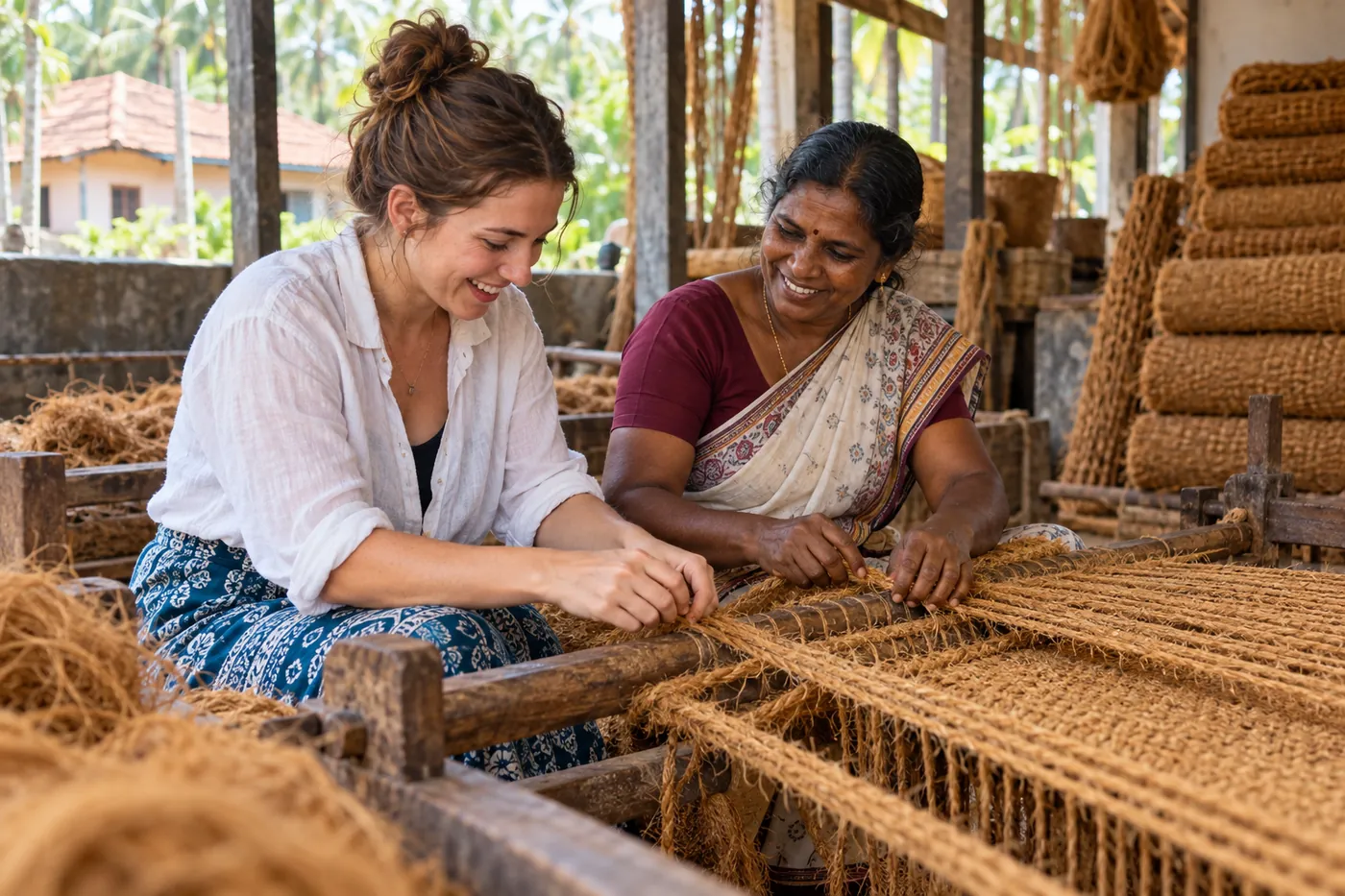
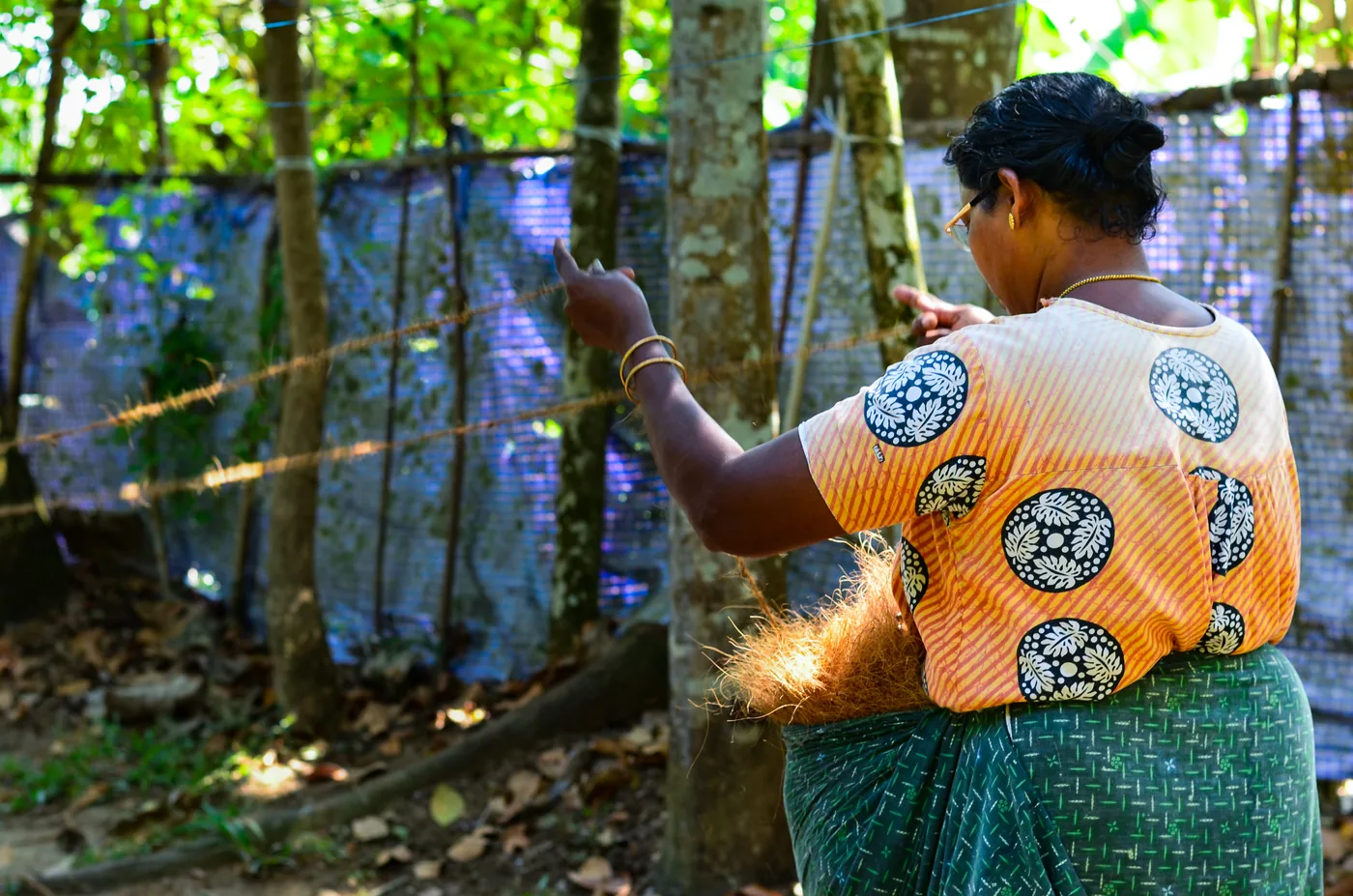
Coconut fibre, turned into rope and craft by hand.
Coir weaving is one of Kerala's oldest cottage industries — coconut husk fibre spun and woven by hand into rope, mats, and more, fingers moving in a rhythm learned over years. A hands-on session shows the real skill behind a craft still practiced in coastal villages, often by the same families for generations.
Coir is the golden-brown fibre that comes from the husk of the coconut, and it is one of Kerala's oldest industries. Around Alappuzha, coir-making has sustained families for well over a century, and Alleppey coir even holds a Geographical Indication tag. Yet most visitors walk over coir mats without ever thinking about where they came from.
The process is remarkable. Matured coconut husks are soaked in the backwater, often for months, until the fibres loosen. They're then beaten with wooden mallets, and the fluffy golden fibre is spun into yarn by hand or machine. From yarn come ropes, mats, matting and carpets. It's slow, physical, skilled work, and it's mostly done by women in and around the villages.
In this workshop, you try it yourself under an artisan's guidance: twisting fibre into yarn and working it toward something you can hold. It's tactile and surprisingly hard. We work with artisans who enjoy teaching, and we keep numbers small so everyone gets time at the wheel or the loom. It's a gentle, absorbing way to understand what these waterways have been feeding for generations.
This craft is largely practised by women's cooperatives — your visit directly supports them.
This experience can be added to a fully personalised itinerary — shaped around your dates, your pace and your interests, never a fixed package. Our signature multi-day journeys go further still: accommodation, meals, transfers and a private guide included throughout, so the only thing left to plan is what you want to feel.
What surprised you about how coir is actually made?
That it starts with coconut husks soaking in the backwater for months, our guide said, before anyone even touches them with a mallet. I'd walked on coir mats my whole life without once wondering about the process behind them.
What was it like trying to spin the fibre yourself?
Much harder than it looked. The artisan's hands moved so fast and evenly, and mine kept producing lumpy, uneven yarn that she'd gently fix without making me feel bad about it.
Did you notice the physical effort involved?
Completely, my hands were tired within minutes, and she explained this is mostly done by women in these villages, day after day, which gave the whole craft a different weight once I'd felt even a small fraction of how demanding it actually is.
What did you leave with, beyond the small piece you made?
A genuine appreciation for something I'd always considered background texture. I don't think I'll walk across a coir mat again without at least a flicker of thought about the months of soaking and beating that got it there.
Part of these journeys: Family Journeys
Every Raw India Experience begins with a conversation. Tell us what you're looking for — we'll design the rest. No payment is taken here.
A confirmation is on its way to your inbox, and a member of our team will personally reply within 24 hours.
Your data will be secured with us. We will not use it for any promotional activities, and we will delete the data after 100 days of non-communication.