Gallery
Sustainable aquaculture, explained by the people doing it.
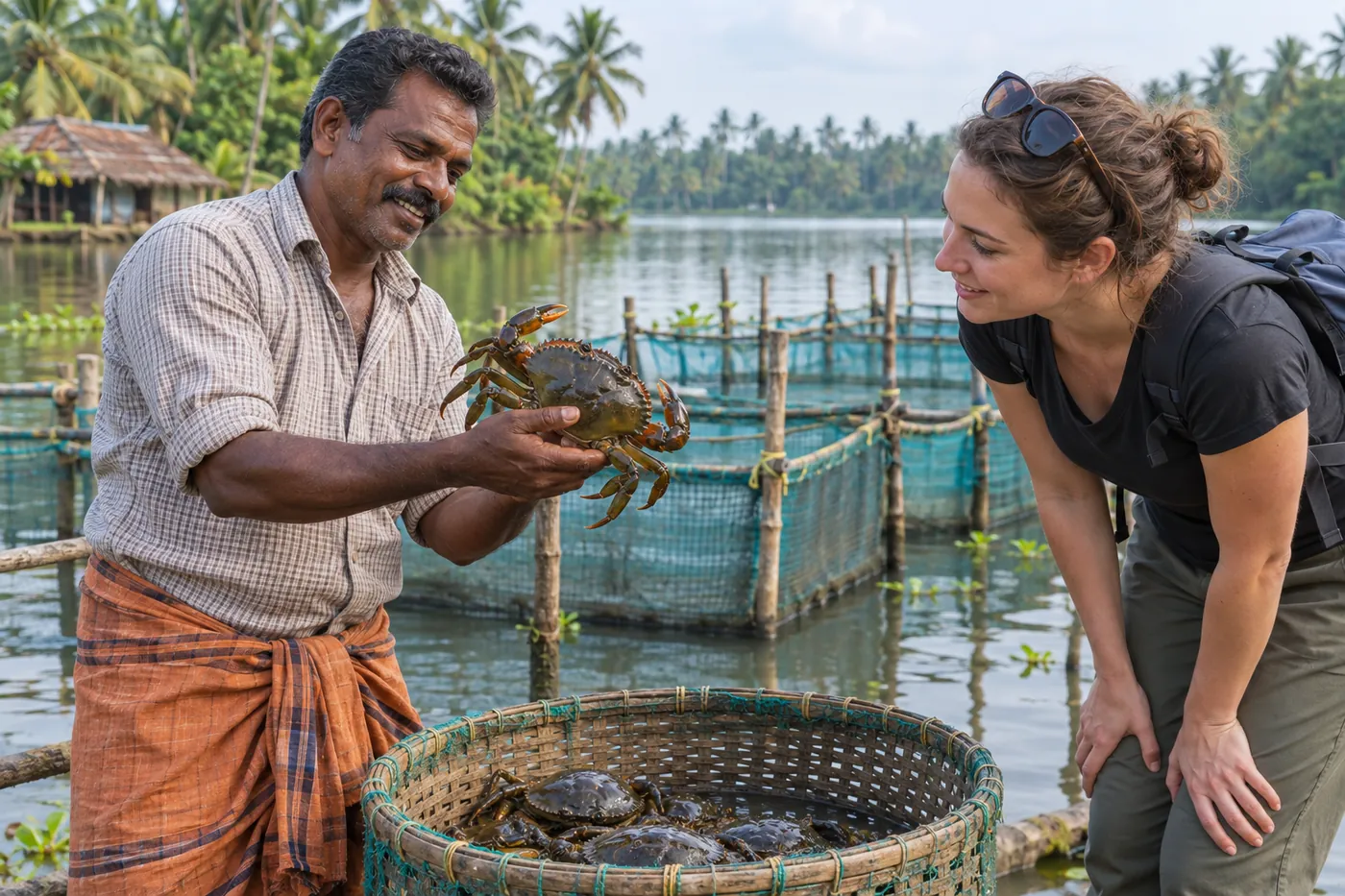
Backwater crab farming is a quieter, more sustainable trade than it looks — small operations balancing tidal cycles with careful harvesting, nets checked by hand at exactly the right hour. See how it's done, feel the particular strength of a live mud crab, and understand why it matters to the local economy.
Kerala's backwaters aren't only for boats and birds. They're also a working landscape of fish and crab farming, and mud crab is one of the most prized seafoods on the coast. On this visit, you see how crabs are raised in brackish water, what they eat, how they're looked after and how they're harvested.
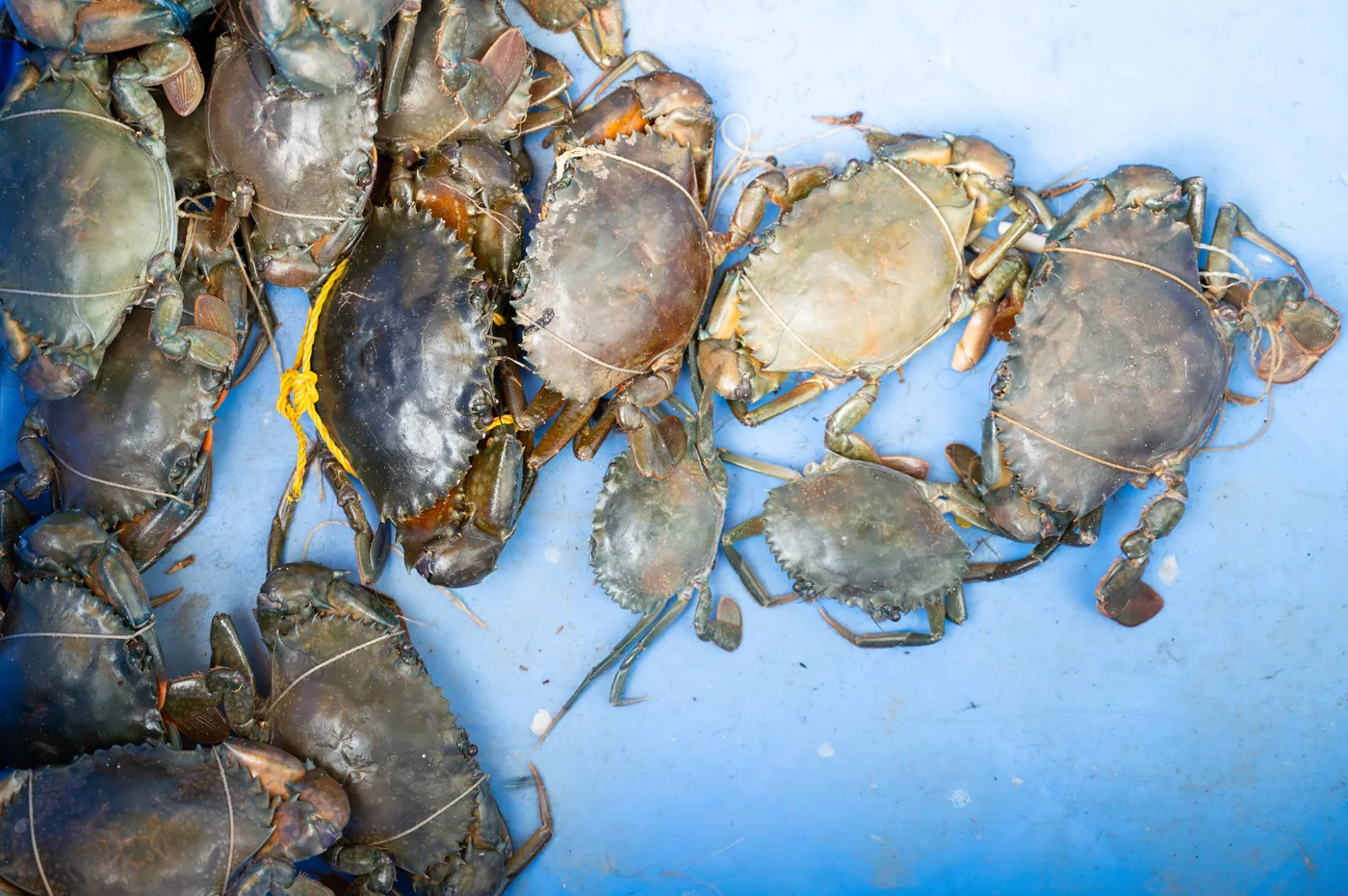
Kerala's backwater crabs include mud crab, green crab and red crab, and villages around Kochi such as Kumbalangi have become known for their fish and crab farming, alongside the famous Chinese fishing nets. Your guide will explain how farmers choose their sites, how the water is managed, and how the seasons and tides affect the harvest. It's a side of the backwaters most visitors never see, and a genuine window into how many families here earn their living.
This is a farm visit with a guided demonstration, not a restaurant meal. We're clear about that so nobody expects a crab dinner. We keep the group small so the farmers can show you their work without disruption, and we ask that you wear closed shoes and be careful near the water. If you're squeamish about handling live animals, let us know; you can watch from a comfortable distance.
Best paired with a seafood meal the same day, if timing allows.
This experience can be added to a fully personalised itinerary — shaped around your dates, your pace and your interests, never a fixed package. Our signature multi-day journeys go further still: accommodation, meals, transfers and a private guide included throughout, so the only thing left to plan is what you want to feel.
What did you actually see at the crab farm?
Ponds of brackish water tucked into the backwaters, much less glamorous than I'd pictured, and a family who clearly knew every inch of it. Our guide explained mud crab is one of the most prized catches on this coast, and you could tell from how carefully they were handled.
Was handling the crabs part of it?
Entirely optional, which I appreciated, since I'm not great around live crustaceans. I watched from a comfortable distance while a braver member of our group had a go, and the farmer clearly enjoyed showing off a little.
Did you learn something about the backwaters you hadn't expected?
That this quiet aquaculture work is happening alongside the more famous Chinese fishing nets nearby, and it's just as much a part of how people here actually make a living. It felt like seeing the working backwaters, not the postcard version.
What was the mood of the visit like?
Relaxed and unhurried, a family talking us through work they clearly took pride in, with none of the performance you sometimes get on a "farm visit." It felt like we'd been let in on something ordinary rather than shown a show.
Every Raw India Experience begins with a conversation. Tell us what you're looking for — we'll design the rest. No payment is taken here.
A confirmation is on its way to your inbox, and a member of our team will personally reply within 24 hours.
Your data will be secured with us. We will not use it for any promotional activities, and we will delete the data after 100 days of non-communication.