Gallery
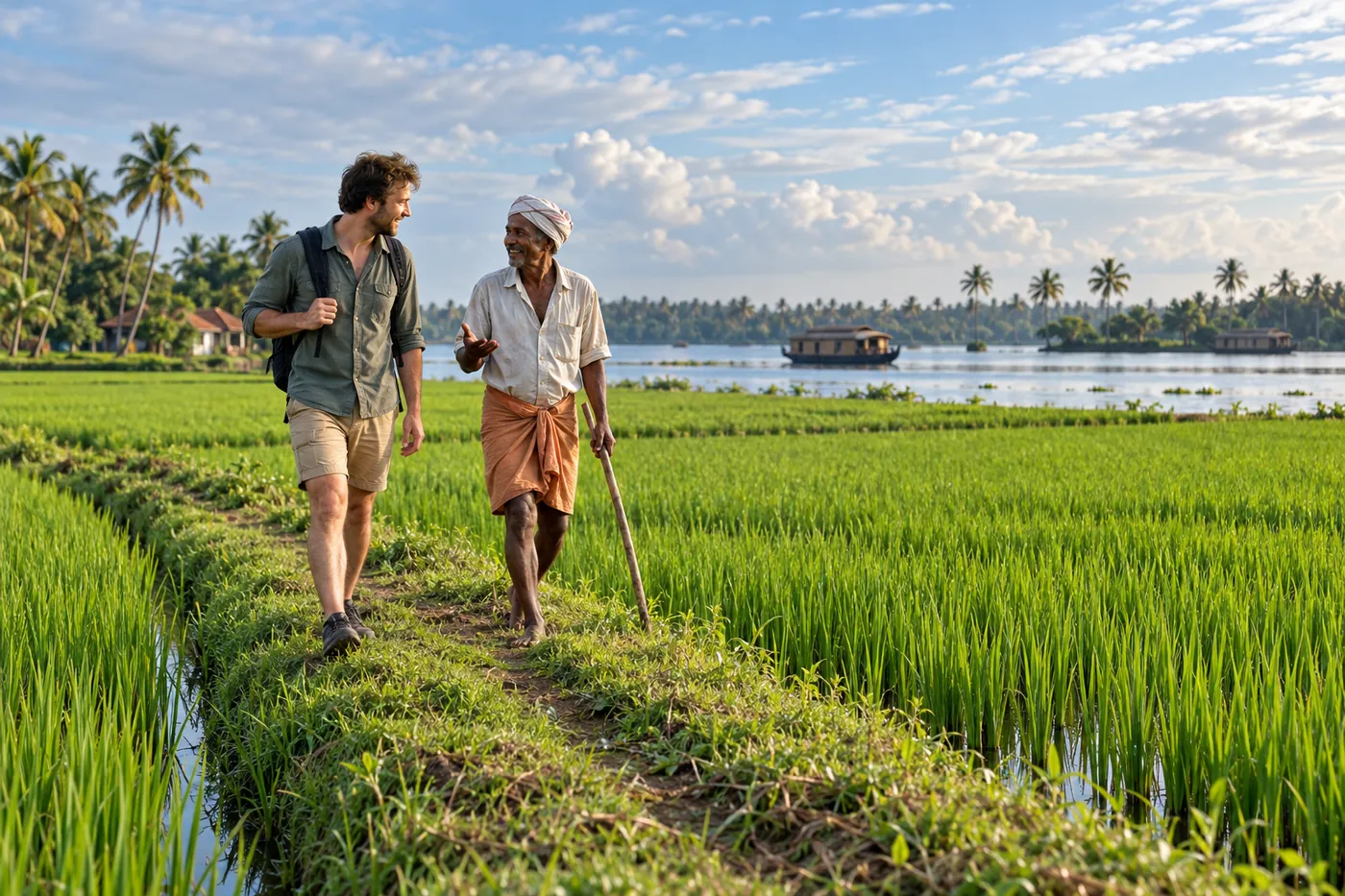
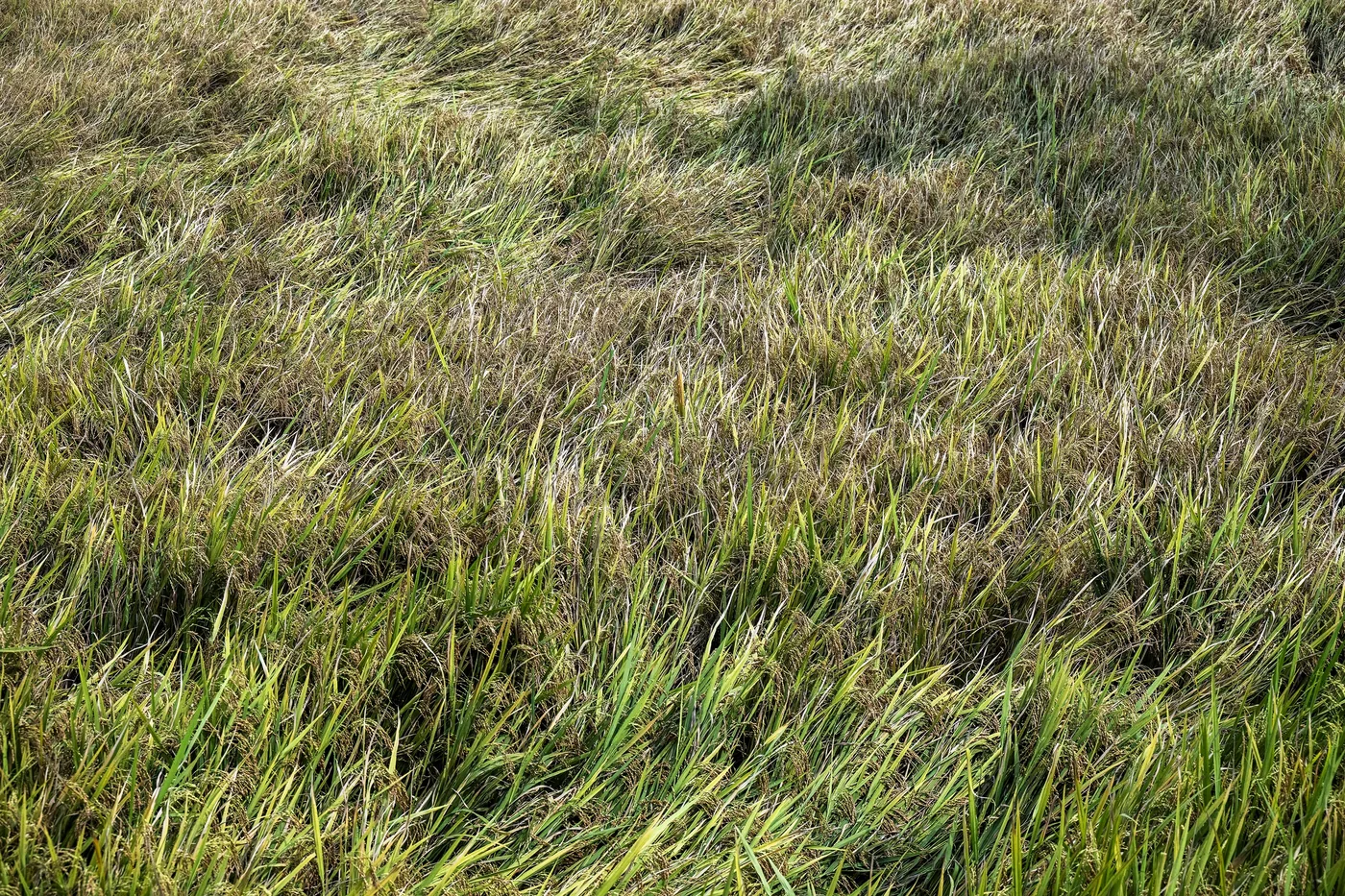
Farmland that sits below sea level, and the people who farm it.
Kuttanad's paddy fields are reclaimed from below the backwaters, an engineering feat as much as an agricultural one — fields that sit lower than the water beside them, held back by generations of careful bunding. Walk the narrow paths between fields and understand a farming system found almost nowhere else on earth.
In much of the world, farmland sits above the sea. In Kuttanad, some of it sits well below. Parts of the paddy fields here lie as much as two metres below sea level, held back from the water by earthen bunds built and maintained by hand. It's one of the very few places in the world where rice is grown this way, and the Food and Agriculture Organization of the United Nations recognises Kuttanad as a Globally Important Agricultural Heritage System.
Walking through the paddy is the best way to understand it. You stand on a raised bund with green fields on one side and a canal on the other, and you begin to see the logic: water managed by generations of local farmers, boats used like tractors, flocks of birds working the fields behind the plough. Your guide will explain how the seasons work, how the land is prepared and harvested, and why the region is often called the rice bowl of Kerala.
The look of the fields changes with the seasons. December to February usually offers drier, easier paths; the monsoon months bring the deepest green, but paths can be muddy and slippery. Either way, the walk is gentle and flat. We schedule it for the cooler hours, keep the group small and let you go at your own pace, stopping wherever something interests you.
Fields look completely different pre- and post-harvest — ask which season suits your interest.
This experience can be added to a fully personalised itinerary — shaped around your dates, your pace and your interests, never a fixed package. Our signature multi-day journeys go further still: accommodation, meals, transfers and a private guide included throughout, so the only thing left to plan is what you want to feel.
What's the thing about Kuttanad that actually surprised you, standing in it?
That the field beside the canal I was walking next to sits below sea level, held back by a mud wall people built and still maintain by hand. I'd walked past plenty of flat green fields before without once wondering how they stayed dry.
Did the walk itself feel different from what you expected?
Quieter and slower, in a good way. Our guide kept stopping to point out birds working the freshly ploughed rows, herons mostly, picking through the mud right behind wherever farming was happening that morning.
Was there a moment you actually saw farmers at work?
A small group planting seedlings by hand in flooded rows, bent over in a rhythm that looked exhausting and completely unbothered at the same time. Our guide said this exact method has barely changed in generations.
How did the walk change how you think about rice?
I don't think I'll look at a plate of plain rice the same way again. Standing on a bund with water on both sides, understanding that the ground under my feet was essentially reclaimed from a lake, made the whole idea of "just rice" feel a lot less simple.
Part of these journeys: 7-Day Kerala Itinerary
Every Raw India Experience begins with a conversation. Tell us what you're looking for — we'll design the rest. No payment is taken here.
A confirmation is on its way to your inbox, and a member of our team will personally reply within 24 hours.
Your data will be secured with us. We will not use it for any promotional activities, and we will delete the data after 100 days of non-communication.