Gallery
The tree that built rural Kerala's economy, from root to toddy.
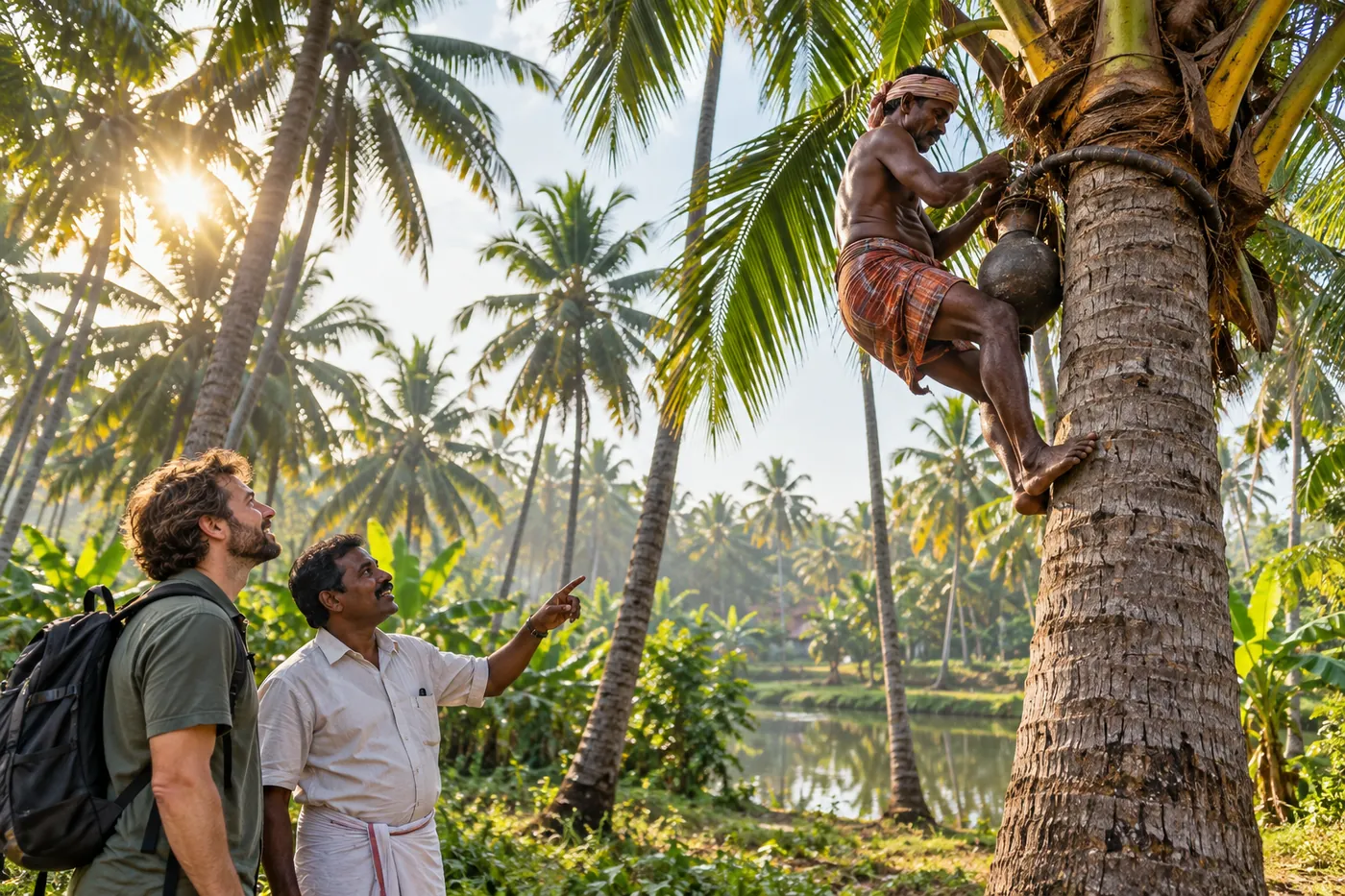
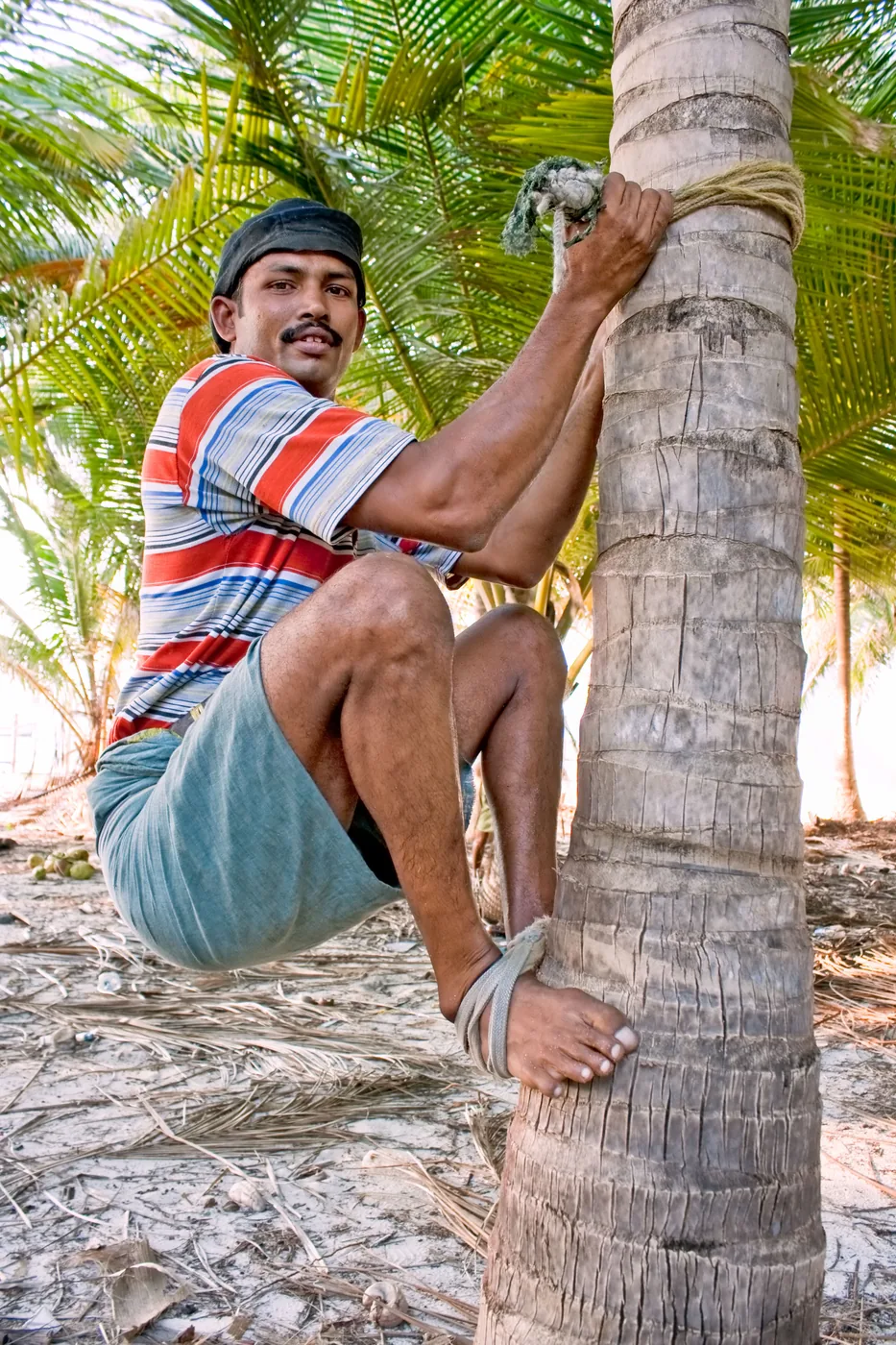
Almost nothing about a coconut farm is wasted — and the toddy tapper's high-altitude work is the most skilled part of it. Watch a tap made forty feet up a swaying palm, the tapper moving with total confidence, and understand a farm most visitors only ever see from a car window.
Kerala's name is popularly said to come from "kera", the coconut palm, and it's not hard to see why. The tree is everywhere — along canals, around houses, over paddy fields — and almost nothing about it goes to waste. The water is drunk, the flesh is eaten and pressed for oil, the husk becomes coir rope and matting, the leaves become thatch and baskets, and the wood becomes furniture and beams. No wonder it's sometimes called the tree of life.
On this visit to a working coconut farm, you see it all in one place. You'll watch the harvesting and processing, learn how the fruit becomes oil and copra, and, if you like, taste tender coconut water straight from the nut. You'll also see how the sap is collected from the flower stalk to make toddy, with a demonstration from a tapper who has done it for years. Fresh, unfermented sap is sweet and non-alcoholic; toddy, once fermented, is alcoholic and subject to Kerala's legal drinking age. Tasting is entirely optional.
We choose farms that welcome visitors and where the family enjoys explaining their work. The tapper stays up the tree and you stay on the ground. It's a relaxed, sensory visit — sweet coconut water, the sound of husks being split, the smell of drying copra — that helps you see the palm trees along every canal in a completely new way.
Tapping happens at height — a good one for anyone who enjoys watching real skill, not just doing it.
This experience can be added to a fully personalised itinerary — shaped around your dates, your pace and your interests, never a fixed package. Our signature multi-day journeys go further still: accommodation, meals, transfers and a private guide included throughout, so the only thing left to plan is what you want to feel.
What's the thing that actually stuck with you about the coconut palm?
How little of it goes to waste, according to our guide. Water, flesh, oil, husk turned into rope, leaves into thatch, even the wood into furniture. I'd always thought of coconut as one ingredient. It's basically an entire hardware store growing on one tree.
Did you get to taste anything straight from the source?
Tender coconut water, cut open right in front of us, colder and lighter than anything bottled. It's a small thing, but drinking it that fresh completely resets what you think coconut water is supposed to taste like.
Was there a moment that felt genuinely skilled?
Watching the tapper go up for the toddy demonstration, easy and fast, like the tree was a ladder built specifically for him. We stayed firmly on the ground and watched, which felt like the right amount of involvement.
How did the visit change how you see coconut palms now?
I used to just see them as scenery, lining every canal and road. Now I can't look at one without thinking about the ten different things a family might get out of it, which is a strange, nice thing for a farm visit to leave you with.
Part of these journeys: 7-Day Kerala Itinerary · NRI Homecomings
Every Raw India Experience begins with a conversation. Tell us what you're looking for — we'll design the rest. No payment is taken here.
A confirmation is on its way to your inbox, and a member of our team will personally reply within 24 hours.
Your data will be secured with us. We will not use it for any promotional activities, and we will delete the data after 100 days of non-communication.